Existential Reflections | Vol. 2025
To the “Cogs” Castrated by the System:
AI Finally Gives Us a Chance to Become Whole Again
By Mr. Guo · Reading Time: 15 Min
A Quick Note
Our generation grew up surrounded by grand narratives about “work.”
Stories of hustle and success, corporate ladder chicken soup, self-management tips, side-hustle money guides… These voices seem diverse, but they all circle around one question: teaching you how to chase a little more freedom within the existing rules of the game.
But few are willing to stop and seriously ask something more brutal: How was this game designed in the first place? Why do we curse our jobs while being unable to leave them?
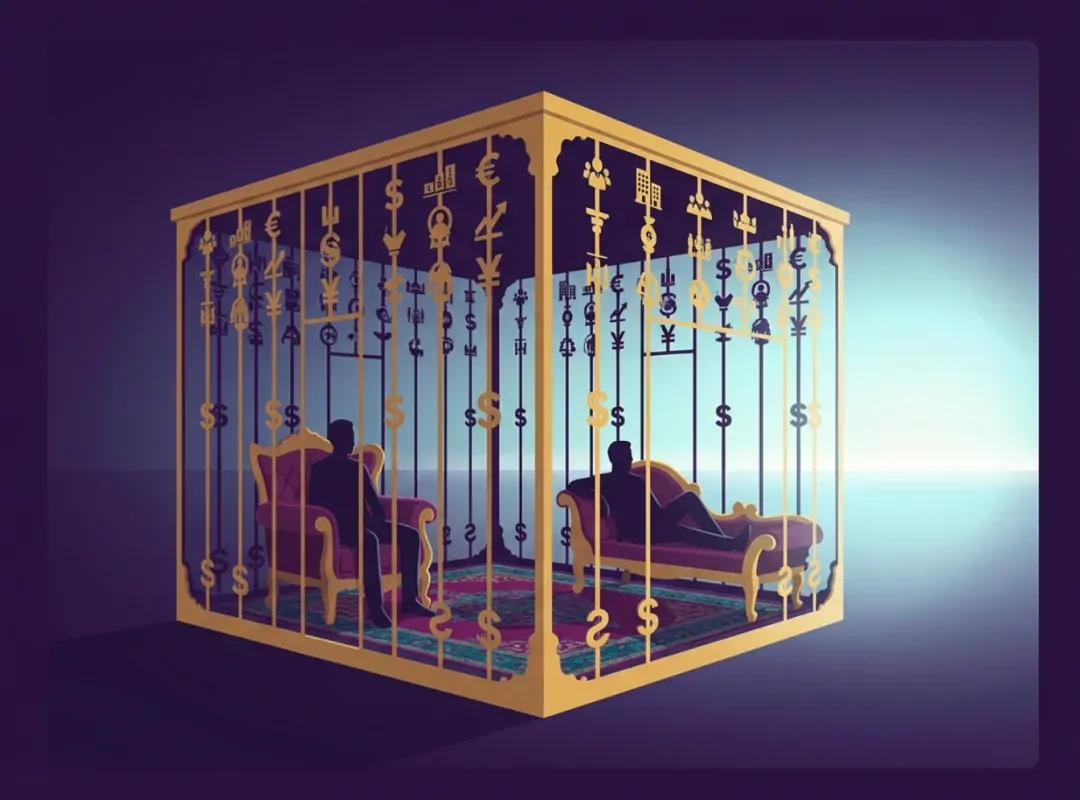
Without addressing these fundamental questions, all discussions about switching tracks, starting side hustles, or quitting to see the world are just “shuffling positions within a cage.” You might move to a less shabby cell or a fancier vehicle, but you never truly leave the prison for even a moment. (This reminds me of the Eagles’ classic “Hotel California.”)
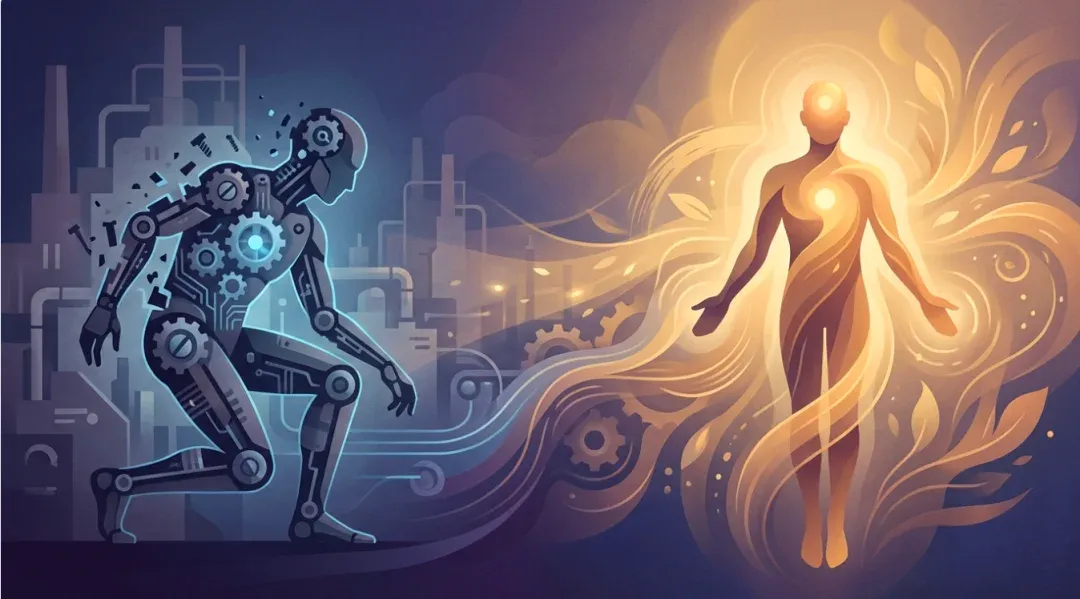
This article won’t offer emotional comfort. What I’m doing is something unpopular: disassembling the modern machine called “work” to see how we’re fed into it as fuel; then discussing why AI is our generation’s last chance to reclaim “complete humanity.”
01: Tearing the Illusion — We’re All Just Shuffling Positions Inside a Cage
1.1 The False “Freedom Narrative”
In this anxiety-filled era, we’re surrounded by a false “freedom narrative.”
You’re told that joining a big tech company will solve your anxiety; that starting a side hustle will achieve financial freedom. So we desperately study “managing up” and “monetizing side gigs.” But pause and look: Are these efforts really leading to freedom? Or are we just gilding the shackles?
Fundamentally, these discussions just teach you how to become a more efficient, more expensive part. When you pour all your energy into optimizing your position within the system, you’re actually reinforcing the system’s control over you. You’ve just gone from an anxious person earning $30K to an even more anxious person earning $60K. You’ve upgraded your desk, but you’re still in the cage.
1.2 What Is the True Face of “Work”?
If we strip away the warm packaging of “self-actualization” and “team value,” the underlying logic of “work” as a lifestyle is brutally cold. It’s not a life choice — it’s a “systematic sacrifice.”
Traditional sacrifice meant offering livestock to gods to maintain order. Modern society’s sacrifice is gentler and more hidden:
You offer your best 8 hours of mental state, your most stable attention, your most creative youth, to that abstract “organization.”
In this process, your personal joys, sorrows, exhaustion, and confusion are just noise to the system. The system provides you with social security, housing funds, and a salary — a guarantee of “survival without collapse” — in exchange for your continuous life energy.
02: Why We Became “Incomplete Parts”
2.1 The Curse of Division of Labor and the Loss of “Biological Closure”
Why must we sacrifice? Why can’t we leave the system? Looking back at history, humanity’s tragedy might not have started with poverty, but with “division of labor.” This is also the beginning of so-called human alienation — the self no longer being the self, gradually becoming the other.
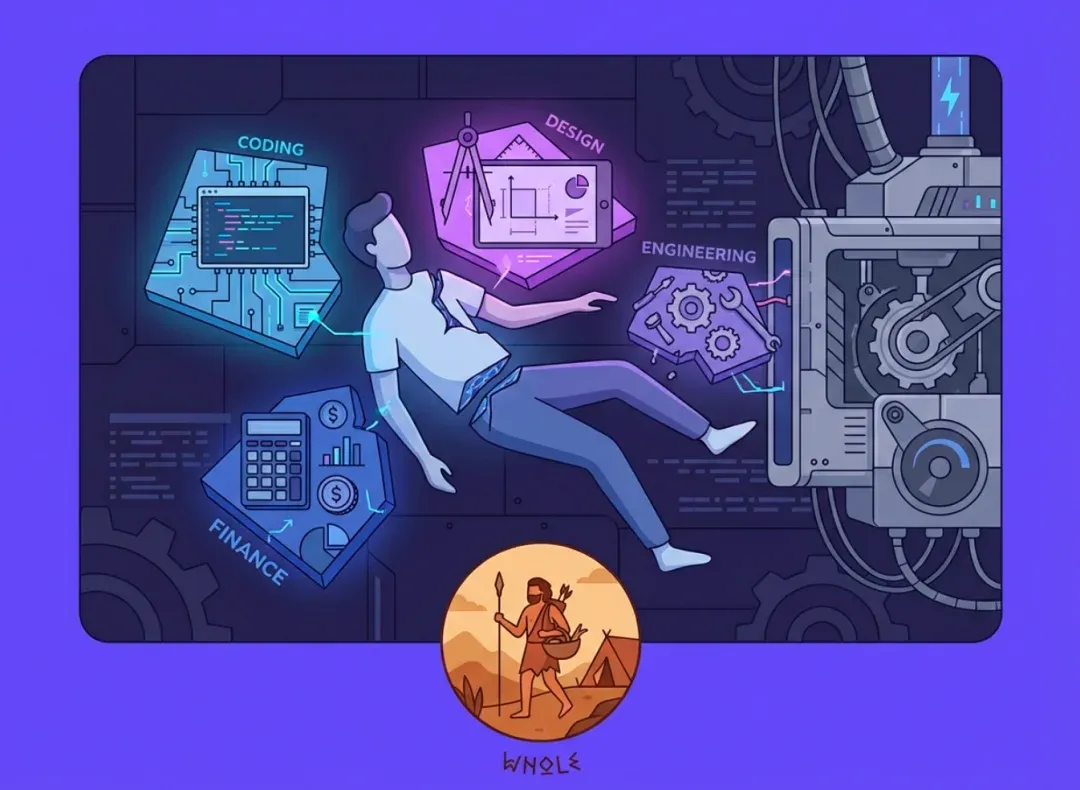
Before division of labor, primitive humans lived hard lives, but they were complete biological systems. They could gather, hunt, build shelter, make fire, treat wounds. Facing nature, they were weak, but their control over their own lives was complete. They didn’t need to depend on any massive central system to survive.
After industrialization, humans were fragmented. You might be an excellent Java engineer or a senior UI designer. But you can’t grow food, don’t understand power generation, don’t know how tap water is purified, can’t even read a medicine formula.
The more advanced industrial civilization becomes, the more individual survival capabilities atrophy.
This means once you’re “pulled out” of the system (like being laid off at 35), you as a part lose all meaning. Here’s the brutal conclusion: You contribute your remaining bit of professional capability (like making mockups) to the machine, and the machine feeds you survival materials. You’re not choosing to work — you’re choosing not to starve.
Alienation’s most terrifying aspect isn’t being oppressed — it’s: you start taking the “alienated state” for granted.
- “Work is just like this”
- “People just work for money”
- “Can’t help it, that’s how the system works”
2.2 The Essence of Salary: Not a Reward, but “Compensation”
Following this logic, we need to redefine “salary.” Many workplace manipulations work because you subconsciously think salary is a “gift” from the company. Dead wrong.
During the 8 hours stipulated in your contract, your body is at the workstation, but your will must yield. You can’t space out, can’t follow curiosity, can’t arrange your own rhythm. Your time must revolve around KPIs. This is suppression of your “subjectivity as a human.”
Salary isn’t a reward for your talent — it’s the “damage compensation” the system pays to legally occupy this portion of your life and suppress your free will.
Modern management’s core is transforming “living people” into “standard modules.” Your replaceability is precisely a sign of system maturity. The more you resemble a part, the safer the system — and the more dangerous your position.
03: The Variable of Our Era — AI Isn’t Just a Tool, It’s a Cyber “Prosthetic” to Restore Our Incomplete Bodies
3.1 When Parts Want to Become “Systems”
For so long, the root of our pain has been: we want to escape, but have nowhere to go. Because as “parts,” we lack the ability to independently complete the entire “create-sell-deliver” process. We must depend on the company as a “system” to produce value.
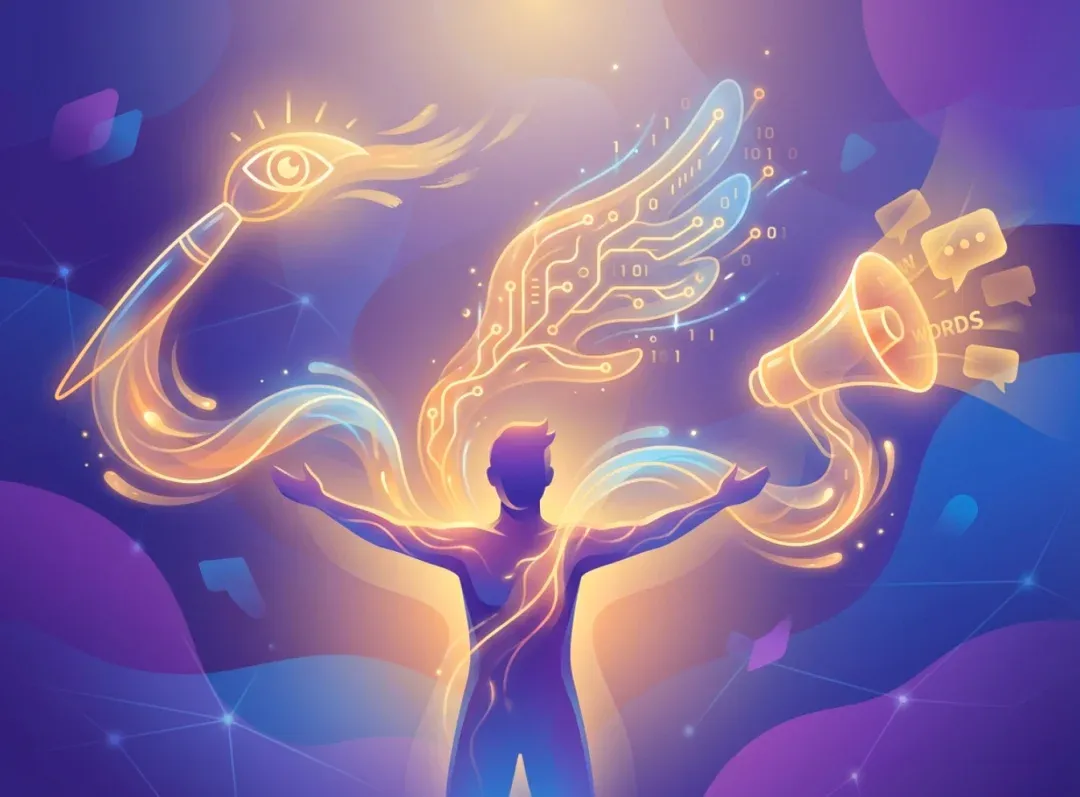
But AI’s emergence changes everything. Please stop thinking of AI as merely “a Copilot that codes faster” or “a toy that generates images.” Philosophically, AI is the individual’s “capability prosthetic.”
It levels skill gaps that once required 10,000 hours to cross. It reassembles humans who were fragmented by industrial society.
- It gives product managers who can’t draw a “visual prosthetic” (Nanobanana).
- It gives operations people who can’t code an “engineering prosthetic” (Codex).
3.2 Rebuilding the “Micro Biological Closure”
This is the essence of what I repeatedly call the Vibe Coder in previous articles. It’s not just a new job title — it’s a “retro” return.
We finally have the chance to be like pre-industrial craftspeople: one person is a team, one person is a complete system. As I mentioned before, I used Codex and GPT together to single-handedly complete the development, deployment, and copywriting for a Shopify SaaS plugin. In the past, this needed a product manager, a backend dev, a frontend dev, and a copywriter. Now, I alone am a company.
The Key Turning Point
When you can use AI to independently complete a product from 0 to 1, you’ve repaired the “biological closure” severed by industrial society. You no longer must depend on that massive system to survive. You’ve gained the ability to breathe independently.
04: Redefining Freedom — From “Negative Freedom” to “Existentialism”
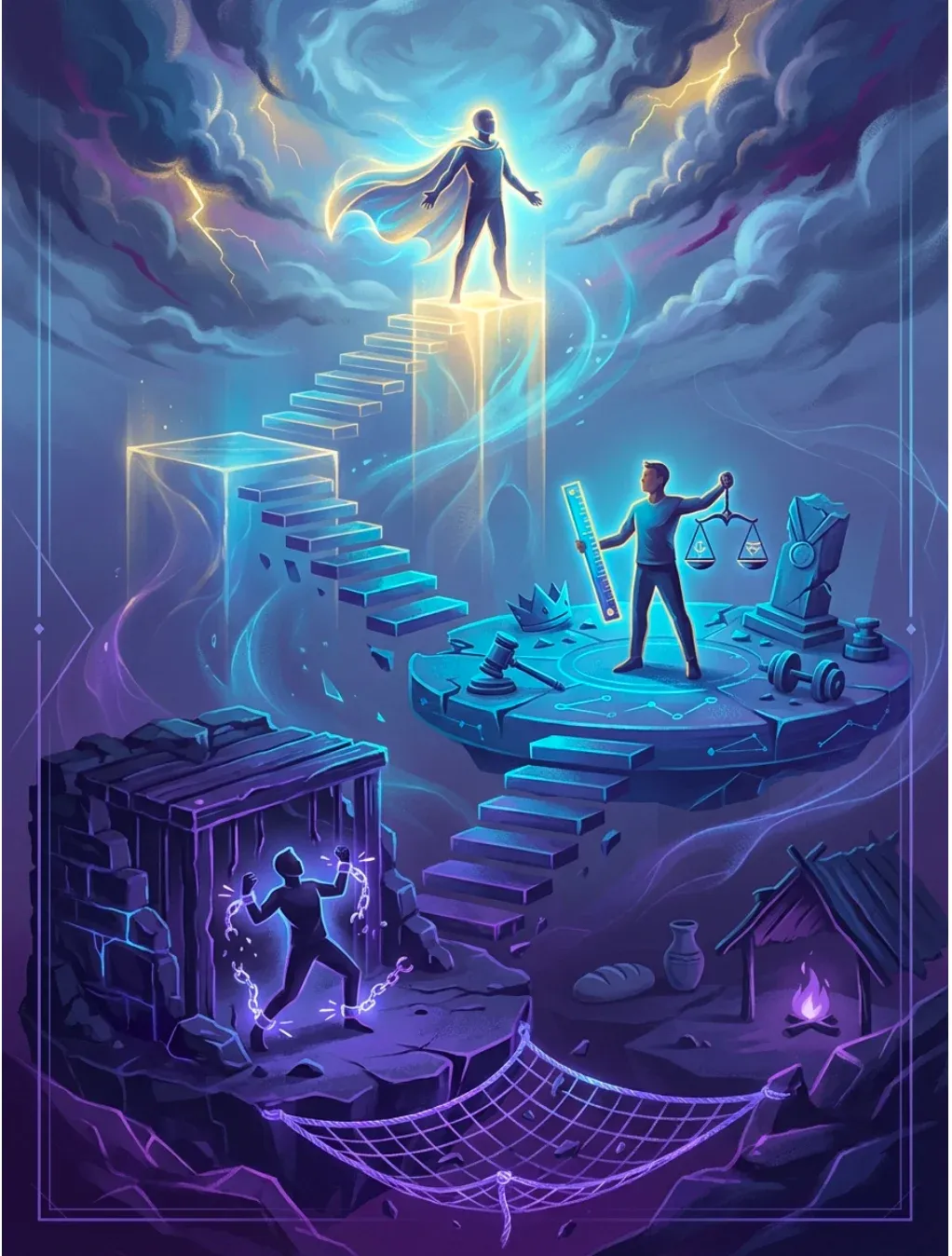
Since AI gave us the shovel for jailbreak, what “freedom” should we pursue?
4.1 First Level of Freedom: The Right to Maintenance Mode (Negative Freedom)
Freedom isn’t doing whatever you want — it’s “security from fear.” If you quit tomorrow, does this city still have a place for you to survive? If not, you’re in the negative zone of the freedom scale.
AI’s biggest dividend is helping you build foundational “survival assets” (Micro-SaaS, content matrices). You don’t need to chase millions in annual income. As long as AI-generated passive income covers your rent and food, you have the “right to maintenance mode.” This means you dare to rest for six months to adjust; you dare to say “no” to obviously unreasonable boss demands. This is the first step to reclaiming dignity.
4.2 Second Level of Freedom: Reclaiming the Judging Power (Value Freedom)
Stop measuring yourself with society’s rulers (houses, cars, titles, ranks). In traditional workplace games, others set the rules. But in the AI-empowered indie development world, you can make a niche product serving 1,000 people. In this little world, you don’t need to bow to traffic or report to KPIs. You’ve reclaimed the power to define your own value.
4.3 Third Level of Freedom: Bearing Consequences Alone (Existentialism)
This is the most dizzying level. When you break free from the system’s arrangements, you can no longer pass the buck. You can’t say “the environment is bad” or “the boss is an idiot.” You must face the market’s coldness yourself, face product failures.
When you have more choices, more freedom, you correspondingly bear more consequences, whether good or bad. In fact, some people are inherently unsuited for pursuing freedom because they inherently don’t want to bear more consequences. Or rather, they’re unwilling to think about or accept the reality of bearing more consequences.
But remember, this pain of “standing alone in the wind” is precisely the evidence that you’re alive as a “complete human.”
05: Action Guide — Manage Your “Human Content” Ratio
5.1 Don’t “Either/Or,” Adjust the Ratio
I’m not telling you to quit tomorrow — that’s irresponsible clickbait logic. Many people’s freedom concept is naively “all or nothing” (either endure work or quit and wander). But in the adult world, freedom is a Ratio. In the environment of human society, there’s actually no absolute 0 and 1 — sometimes it’s more like quantum superposition.
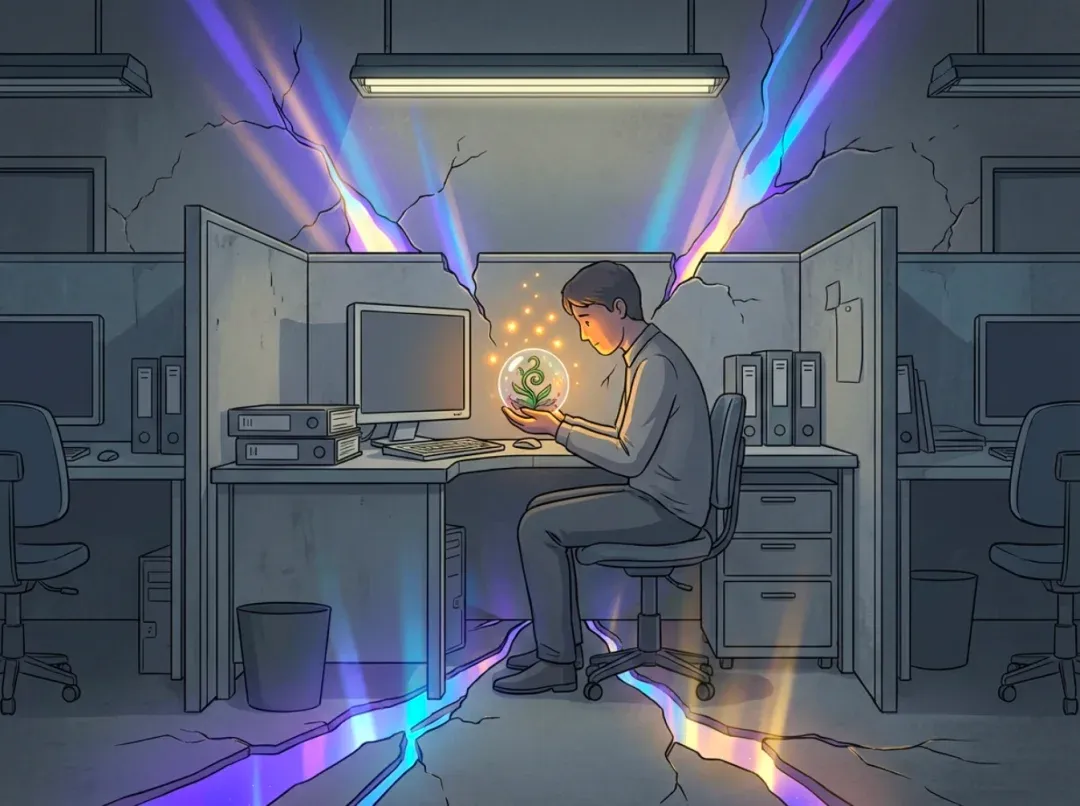
We can start digging tunnels without leaving the prison:
During Work (Pay the Price)
Tell yourself this is exchange, this is compensation. Don’t invest excessive emotional cost, don’t tie self-worth to performance. Mentally detach, refuse internal friction. This doesn’t mean slack off — it means don’t pay emotional costs or value-binding. Before you can escape work, it’s also your training ground toward freedom, sometimes the only one.
After Work (Build the Asset)
This is building, this is buying yourself back. Using AI, squeeze out 2 hours daily to build your own “personal system.”
5.2 Rebel Gently in the Gaps
You don’t have to become a hero immediately. Just starting today, at the same desk, you begin to realize “I’m doing business, not selling myself”; just start using AI to accumulate even a tiny bit of “non-transferable assets” (a piece of code, an article, a user who’s yours).
Tiny Victories
You’re still working, but you’re no longer that “standardized part.” At the system’s edges, you’re using code and AI to write back your own name, stroke by stroke. You’re gradually expanding the ratio of “living for yourself” until one day, quantity becomes quality — what was your main job becomes the side gig, what was a gap becomes vast open sky.
∞
Conclusion: The Return of Heroism
True heroism is, after seeing the “system’s” brutal truth, still loving life, still willing to use tools in hand to carve out even a small “breathing space of freedom” for yourself and family.
Work isn’t just a place to sell time — it’s a site where you interface with structure. Freedom isn’t just a grand word — it’s the clarity and resilience of using technology throughout your long life to buy back a bit more time, to fight for a bit more choice.
In the AI era, we finally have a chance to stop being a well-functioning cog, and become again a complete, complex, even somewhat clumsy, but our own person.
Found this analysis insightful? Give it a 👍 and share it with more friends who need it!
Follow my channel to explore the infinite possibilities of AI, going global, and digital marketing together.
🌌 Schopenhauer said: “Life swings like a pendulum between pain and boredom.” But in this era, perhaps we finally have a chance to stop that pendulum at our own chosen mark.
