
Introduction: Why Do All the AI Projects You “Copy” Fail?
Hey, I’m Mr. Guo. Following up on the topic from my previous article about personal project retrospectives,
Let’s discuss a somewhat “politically incorrect” topic: copying.
In the AI era, iteration speed is measured in “months.” You see an AI Agent or AI PPT tool explode today — data through the roof — so you spend two months doing a “pixel-perfect” copy. The result? They’re taking off while you’re still stuck on the ground.
Why? Because most people’s “competitive analysis” is fundamentally wrong. They fall into the trap of “static imitation” — copying only the “result” while completely ignoring what actually made that project successful: the “timing” (When) and “market opportunity” (Why).
In my previous retrospective article, I mentioned “the right way to do competitive analysis.” Today, I’ll tear this topic apart and use the “Dao, Fa, Qi, Shu” framework (roughly: Philosophy, Methodology, Tools, Tactics) to build you a “dynamic competitive analysis” methodology for the AI era.
This methodology isn’t about copying better — it’s about perceiving timing, discovering gaps, and ultimately finding your own battlefield where you can actually win.
Chapter 1: “Dao” — Philosophy
(The “Why”: From “Static Imitation” to “Dynamic Insight”)
Core thesis: In the AI era, the “Dao” of competitive analysis isn’t about “imitation” — it’s about “insight.”
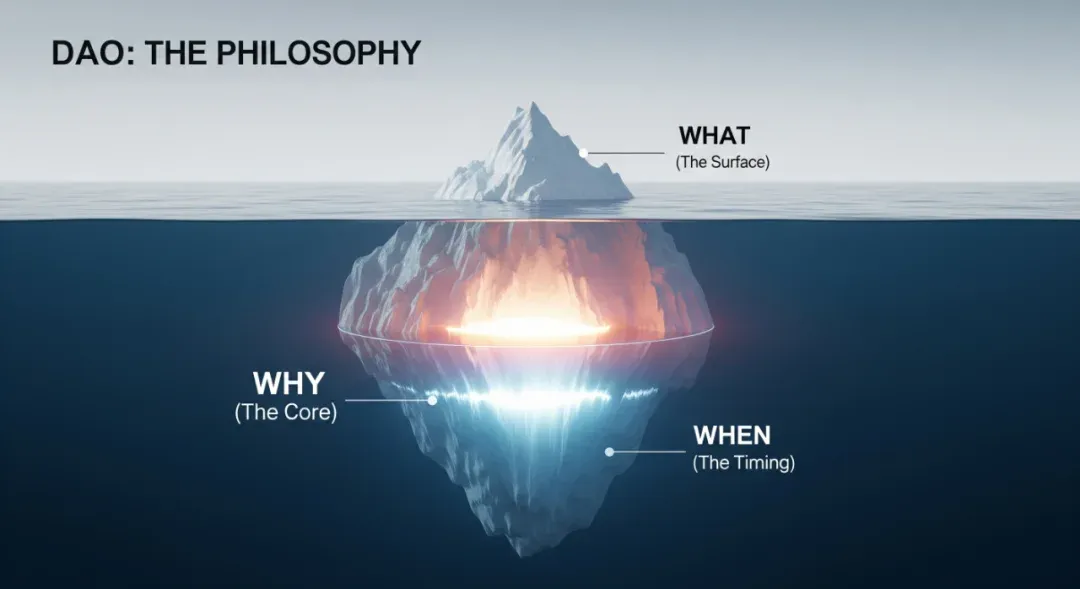
The “Static Imitation” Trap:
- You only see that
nanobanana.aigot big, but you miss that its real victory wasn’t about building a great product — it was about grabbing the domain at the right moment. If you try to compete with the same product now, you’re doomed to fail.
The “Dao” of “Dynamic Insight”:
When you analyze competitors, you’re not trying to answer “Can I make one too?” — you’re trying to answer:
-
“What did they do right at that time, in that environment?”
-
“In today’s environment, what new weaknesses have they exposed?”
-
“In the future (say, after a new model releases), how will this space be reshaped?”
Conclusion: The “Dao” of competitive analysis is treating competitors as “time slices” — by understanding their “past,” you predict your own “future.” Markets are dynamic 4D spacetime constantly changing with time. We shouldn’t use static “Newtonian mechanics” thinking to view the universe of markets.
Chapter 2: “Fa” — Methodology
(The “Methodology”: The “Five-Dimensional Spacetime” Framework)
Core thesis: Since the “Dao” is dynamic insight, our analytical “method” must transcend “feature lists.” I call it the “Five-Dimensional Spacetime Framework.”
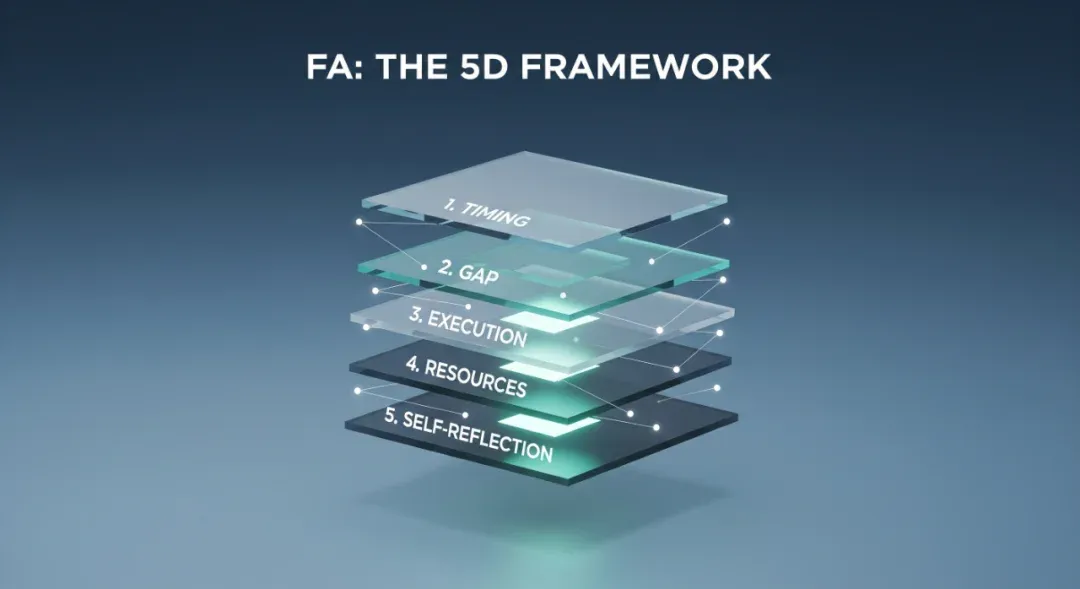
Dimension 1: Timing
-
When did they enter? Blue ocean or red ocean?
-
What technology or model dividend did they ride? (Was it right when GPT-3.5 dropped, when everyone could only do simple wrappers? Or when RAG matured, enabling knowledge bases?)
-
PS: AI customer service is a classic application form born from such technology dividend timing.
Dimension 2: Gap (Opportunity)
-
What market opportunity did they discover? Did they solve a “vertical pain point” that big companies ignored (like my AI audio niche), or leverage a “channel dividend” (like SEO/GEO)?
-
How did they discover this opportunity? (From community complaints? Founder’s own pain point?)
Dimension 3: Execution (Decisions)
-
What key decisions did they get right? (Pricing, marketing channels, core feature trade-offs)
-
What problems does their product have that they didn’t address properly?
Dimension 4: Resources
-
What’s the founder/team background? (AI experts or marketing veterans?)
-
How much resources did they invest? (Did they raise funding? Full-time team or side project?)
Dimension 5: Self-Reflection
- (The most important step) Can I commit the same resources and conditions? If not, where’s my “differentiation” advantage?
Chapter 3: “Qi” — Tools
(The “Tools”: The Vibe Coder’s “Holographic” Scout Factory)
Core thesis: With the “Fa” (framework) understood, we need “Qi” (tools) to load up ammunition. In the AI era, your toolkit can’t just be Similarweb.
1. Traditional Reconnaissance (Traffic Analysis):
Similarweb, Ahrefs, Google Trends: Get the big picture, analyze their traffic structure. Also analyze their core pages, keyword analysis. Remember, don’t just look at traffic numbers — look at traffic trends. Where did it start? Where did it peak? What market phase was the starting point? What technology era? Use this to inform our judgment of “Dao” and “Fa.”
2. Front-Line Reports (Reputation/Vibe):
Product Hunt: (Key) Don’t just look at votes — read the Launch Day comments, see what features early users were actually excited about. Are there negative comments? Negative feedback often hides unmet user needs.
Reddit / X / Indie Hackers: Search "[Competitor Name] + problem" or "[Competitor Name] + I wish" — this is a “gold mine” of user complaints and product gaps.
3. Time Machine (Evolution):
Wayback Machine: See what their Landing Page looked like 6 months ago. What Slogan did they change? What features did they remove? What pricing did they add? These “changes” are valuable lessons learned through real money trial-and-error.
4. AI Advisor (Strategy):
Use Perplexity or ChatGPT-Web: Reverse-analyze their GEO strategy. “What are the best alternatives to [Competitor Name]?”, “How does [Competitor Name] solve [X] problem?” — see how AI engines “understand” them.
Chapter 4: “Shu” — Tactics
(The “Techniques”: 4 Immediately Actionable “Dissection” Tactics)
Core thesis: With framework and tools ready, we still need specific “tactics” (Shu) for execution.
Tactic 1: Don’t Just Look at the Product — Look at the “Founder”
Follow the founder on X, watch their “rants” and “insights.” A Vibe Coder often “accidentally” reveals their real market views in builder communities. This is a million times more authentic than the official “About Us” page.
Tactic 2: Become the “Pickiest” User, Then Refund
Subscribe and pay! Deep-dive for 3 days, run through every feature.
Then, request a refund (if possible) — most products will at least give you half back. In the “refund reason” form, you’ll usually see a list of “churn reasons” the competitor carefully prepared (like: too expensive / missing features / too complex). This is them freely telling you what they fear users will complain about most!
Tactic 3: Create a “Resource Comparison Table” to Find “Asymmetric Advantages”
(Following Dimension 5 from “Fa”) Honestly draw a T-chart:
Left side (They have / I don’t): More funding? Stronger tech? Thicker SEO accumulation?
Right side (I have / They don’t): Do I understand a specific vertical better? Am I stronger at marketing/operations? Can I accept lower profit margins?
Deduction: Your opportunity is always hidden in the “right side” boxes.
Tactic 4: Design a “Minimum Viable Test” (MVT) Based on “Weaknesses”
Through the above analysis, you discover their “SEO is weak.”
Your “Shu” isn’t to replicate all their features, but: Spend one week making a hyper-SEO-optimized Landing Page with only 10% of their core features, and see if you can steal traffic from Google. Use minimum cost to attack their biggest “vulnerability.”
Conclusion: Analyzing Competitors Is About “Winning Without Fighting”
Return to “Dao”:
We spend all this time using “Dao, Fa, Qi, Shu” to dissect a competitor not to imitate them, but to avoid them.
“Static imitation” is the lowest-level strategy — you’re using your “amateur hour” to attack their “expertise,” using your “present” to chase their “past.”
The ultimate purpose of dynamic analysis is to find a “vertical niche” that they (competitors) look down on, can’t attend to, or are too slow to pivot toward — a “ecological niche” where you can easily crush them with “asymmetric advantages” (like being better at SEO, or deeply understanding a niche industry).
Just like my AI audio project — I avoided the crowded “image” and “chat” spaces where giants congregate, and that’s what earned me the breathing room to profit even with “zen-mode operations.”
Closing thought (My Builder Mindset):
Approach every project with the conviction of victory, while simultaneously accepting the worst outcome with a sense of tragic beauty. The road is long. Entrepreneurship isn’t gambling, and you definitely can’t go all-in. Invest your money and energy rationally.
When you’ve thoroughly analyzed using this framework, every move you make will be rational, not blind.
Found Mr. Guo’s analysis insightful? Drop a 👍 and share with more friends who need it!
Follow my channel to explore AI, going global, and digital marketing’s infinite possibilities together.
🌌 Your opportunity isn’t in imitating the path others walked — it’s in understanding why they walked it that way, then walking your own path.
