
Word count: ~3000 words
Estimated reading time: ~13 minutes
Last updated: October 12, 2025
Is This Article for You?
If you’re an indie developer, product manager, or entrepreneur eager to catch the AI wave, and want to know whether “AI wrapper” business is viable, how deep the waters are, and most importantly — how to actually make money and survive — then this Playbook is for you.
Core Takeaways
✅ Reality Check: Why others making money doesn’t mean you will? Revealing true reasons behind wrapper success.
✅ Profit Equation: How much can AI wrapper apps actually make? Real data and unit economics breakdown.
✅ Survival Threat: Facing the “Wrapper Death Spiral” — understanding platform risk’s brutal reality.
✅ Two Paths: Detailed breakdown of “Blitzkrieg” vs. “Trench Warfare” profit strategies.
✅ Action Manual: Complete step-by-step guide to launching a profitable AI wrapper from 0 to 1.
Can AI Wrapper Sites Make Money? How to Actually Profit?
Introduction: AI Wrapper — A High-Risk “Gold Rush”
Hey, I’m Mr. Guo. Recently, one of the most asked questions is: “Mr. Guo, can making an AI wrapper app still make money?”
My answer is simple and direct: Yes, and many people are making money, but that doesn’t mean you’ll make money just by doing it, unless…
AI wrapper apps essentially use APIs from giants like OpenAI and Midjourney, packaged into products for specific scenarios. It’s like the 19th-century gold rush — APIs are rivers flowing with gold, and we indie developers are the first to rush to the river with simple sieves (wrappers) to pan for gold.
But first, we must burst a bubble: Others making money doesn’t mean you will. Actually, simple pure wrapper apps — like directly taking an image model API to make an image generator — currently have notable success cases like nanobanana.ai. Many bloggers have analyzed this case online; interested parties can search for details, I won’t elaborate here.
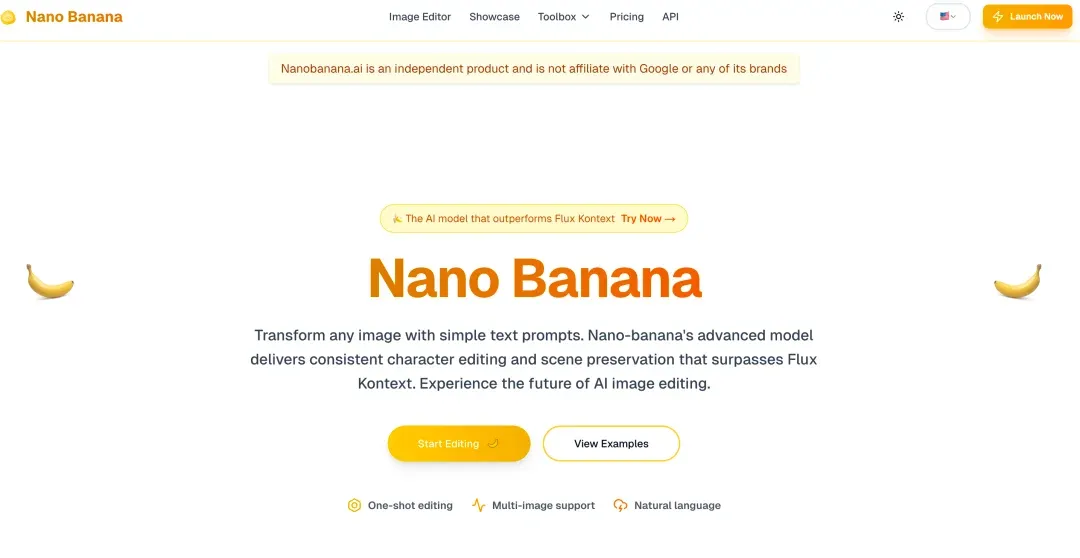
I can responsibly say: this project’s core success isn’t product capability or R&D technical ability — it’s pure market sensitivity plus SEO and other marketing/operations capabilities. You could build an identical site very easily, but just building it won’t earn you that money.
1. Let’s Talk Money First: How Strong Is AI Wrapper App Profitability?
1.1 Don’t Listen to Stories, Look at Data: Real-World Income Reports
The AI app market is huge — users will pay for convenience and specialization. Let’s see some real numbers:
- High-end case: Magai, an all-in-one AI content suite, reached $20,000 MRR in 163 days.
- Mid-tier case: Numerous micro-SaaS projects hit $1,000 - $1,500 MRR milestones in 2-6 months.
- Entry-level case: Bulk Image Generator, an extremely vertical tool, achieved $273 MRR in its first month through clever SEO. Core conclusion: Making money isn’t accidental — it’s a repeatable pattern.
1.2 Profit Model’s Achilles’ Heel: How Not to Get Burned by API Costs?
The core contradiction: Your income is fixed subscription fees, but costs (API calls) are variable. An “unlimited” subscription plan is financial suicide. The only solution: introduce an abstract billing layer, typically a “Credit System.” This isn’t just a pricing strategy — it’s a financial risk control mechanism setting upper limits on each user’s cost risk.
1.3 Can Your “Money Printer” Actually Run? Unit Economics Model
A healthy SaaS business should have Customer Lifetime Value (LTV) at least 3x Customer Acquisition Cost (CAC). Before building, validate your idea with models.
2. Now Let’s Talk Survival: Facing the “Wrapper Death Spiral”
This is AI wrapper business model’s “cancer” — platform risk. Your business is built on someone else’s volcano.
2.1 “Wrapper Death Spiral”: The More Successful You Are, The Faster You Die
The logic is cruel and simple:
- Success Validation: Your wrapper app’s huge success is essentially free market research for the platform.
- Platform Absorption: Platform’s next step is inevitably absorbing the most successful application scenarios into their core product.
- Elimination: Once platform native features launch, your app’s value instantly zeros out, users flood away. This cycle is the “Wrapper Death Spiral.”
Mr. Guo’s Insight: Redefine Your “Business Cycle”
For any sufficiently general and popular feature, platform absorption is almost inevitable. This means a lightweight AI wrapper app essentially isn’t a 10-year sustainable business — it’s an “arbitrage opportunity” existing between platform’s current capabilities and market’s immediate needs. Therefore, your strategic thinking must shift from “building a long-term business” to “maximizing value within a 12-24 month opportunity window.” When to enter, when to exit — can be clearly lifecycle-planned before the project even starts.
3. How to Survive? Two Paths and Four Pillars of Profitability
How to escape the death spiral? The most ideal money-making routes are really just two: one pursuing speed as “Blitzkrieg,” the other building barriers as “Trench Warfare.”
Path One: “Blitzkrieg” — Pure Wrapper, Capture Traffic Dividends
This path’s playbook is similar to products like nanobanana.ai — core is sensitivity, speed, strong operations. You need to discover an emerging demand in the shortest time, quickly launch a simple wrapper product, then rapidly capture traffic through SEO, community marketing, etc. This is essentially a traffic arbitrage game — betting on harvesting a wave of dividends before the platform reacts.
Path Two: “Trench Warfare” — Productization Thinking, Sell Results Not Models
This path builds long-term defense. Core is productization thinking — selling solutions, not model capabilities. For example, text-to-image is a model, but you can make it into countless vertical tools: Remove Watermark, Remove Object, Add Text to Image, etc. Digging deeper, you can make stylized Agent tools for specific scenarios (e-commerce posters, social media headers). These are the four pillars for building “thick wrappers”:
-
Pillar 1: Hide in the Needle’s Eye — Extreme vertical niche specialization.
-
Pillar 2: Stick Users — Outstanding UX with deep workflow integration.
-
Pillar 3: Go Beyond API — Build proprietary value (exclusive data, specialized logic, user feedback loops).
-
Pillar 4: Soft Power — Build trustworthy brand and community in your needle’s eye market.
Mr. Guo’s Insight: Make AI “Invisible”
Successful wrapper apps — AI is merely a component. The real “product” is the complete solution: that specialized workflow, carefully curated data, intuitive UI, and brand trust. This perspective shift is the most important strategic adjustment — moving competitive focus from AI capabilities (a doomed battle) to customer value (a winnable battle). Ultimately, AI becomes “invisible,” seamlessly blending into a larger, more valuable solution.
4. Action Manual: Launching Your AI Wrapper App from 0 to 1
Strategic Starting Point: First Imitate, Then Transcend
For newcomers, the most pragmatic approach: first imitate a few pure wrapper sites, get a feel, run through the entire chain and tech stack. If you can quickly capture a hot topic and first-mover advantage, great — take off directly. If not, use that experience to add productization thinking and iteration paths, integrating the project into specific scenario workflows.
Phase 1: Ideation & Validation (2-Week Sprint) — Don’t Fall in Love with Your Idea
Find repetitive, high-value pain points in niches you understand. Validate before coding through community research, keyword research, and “mom tests.” Finally, build a simple landing page to collect early user emails.
Phase 2: Technical Blueprint (4-Week Build) — Vibe Coder’s Choice
For speed-focused indie developers, recommended defaults: Frontend Next.js, Hosting Vercel, Backend/Database Supabase, Payments Lemon Squeezy (as MoR handling global taxes for you).
Phase 3: Marketing & Growth Engine (Ongoing)
Cold-start through Product Hunt launch. Acquire early users in Reddit and other communities by sharing value. Long-term, Programmatic SEO (pSEO) is AI wrappers’ superweapon — programmatically generating hundreds or thousands of highly optimized landing pages for low-cost organic traffic. Those interested in this should read my article:
Final Verdict: A Game for Sprinters
For indie developers, building a simple AI wrapper app is a viable path to profitability — but extremely high risk. The potential for $1,000 - $10,000 MRR is real and documented.
However, you must clearly recognize you’re racing against the platform itself. Success depends on moving fast, aggressively drilling into vertical domains, and relentlessly adding value beyond the underlying API. This opportunity belongs to sprinters, not marathoners.
“Some ask me, since you see this so clearly, why don’t you do it yourself?”
My answer: energy constraints. I don’t lack projects to work on — I already have several running. Resources and energy are limited. Trade-offs and choices are important to me — some things to do, some not to do.
Found Mr. Guo’s analysis insightful? Drop a 👍 and share with more friends who need it!
Follow my channel to explore AI, going global, and digital marketing’s infinite possibilities together.
