Introduction: AI “Translated” My Musical Soul
Hey everyone, I’m Mr. Guo. Today’s topic isn’t particularly practical — I’m throwing out some philosophical musings. If this resonates with you, I’d suggest having your kids learn music alongside coding in their extracurriculars — it’s genuinely meaningful.
Because through musical aesthetics, you can approach truth through beauty. This world can be composed of musical notes, or mathematical formulas — every particle in existence is filled with music.
A few years ago, about a year before the “GPT moment,” as someone with a humanities background, academic training in music, yet working in internet circles, I hit a deep bottleneck. As a project stakeholder, I couldn’t efficiently communicate with technical teams in their language. As a product person, I couldn’t break down an engineering logic or assess technical feasibility and execution difficulty. I believed my ceiling was limited by IT knowledge. So I bought books and started grinding Python from print("Hello World") (mainly because Python was supposedly the easiest language to learn).
It was an extremely frustrating experience. Even though it’s a simple language, I had to understand from the most basic concepts: what are data types, data structures, functions, classes, conditional logic, loops… They seemed completely disconnected from “building a great product,” yet I had to do it — staring at text where I recognized every character but couldn’t grasp the meaning.
It felt like a jazz musician accustomed to “improvisation” being forced to sit at a piano and repeatedly play boring “Beyer” exercises. A terrible learning experience, yet unavoidable.
Until the AI era exploded.
When I started using AI coding assistants, a strange sense of déjà vu instantly connected everything. I realized I mostly didn’t need to learn any specific language’s “syntax” from scratch, because with AI as my “translator,” all the structural, abstract, framework, and collaborative thinking I’d trained for over a decade in music could transfer nearly 1:1 to software engineering. I suddenly understood: Music and code were never two separate worlds. They’re just two different expressions of the same underlying logic.
1. Micro-Isomorphism — From “Notes” to “Movements”
Music and code are both arts of “abstraction” and “encapsulation.” Both evolved nearly identical, progressively layered structures to manage ever-growing complexity.
-
Note
- Music: The smallest unit (Do, Re, Mi). Has pitch but limited expressiveness.
- Code: Primitive data types like
string,int,boolean. The smallest building blocks.
-
Phrase
- Music: Notes combined rhythmically expressing a minimal “musical idea.”
- Code: Data structures like
{name: "Mr. Guo", age: 33}. Combining scattered data into a meaningful whole.
-
Section (e.g., Verse/Chorus)
- Music: An identifiable, repeatable complete part.
- Code: A Function like
playVerse(). It encapsulates internal logic and can be repeatedly “called.”
-
Movement
- Music: A grand unit with independent themes and structure.
- Code: A Class or Module. Has its own internal state and methods, a complete functional unit.
-
Symphony
- Music: Multiple movements collaborating to complete a grand emotional narrative.
- Code: A complete Application. Multiple modules collaborating to implement complex business functionality.
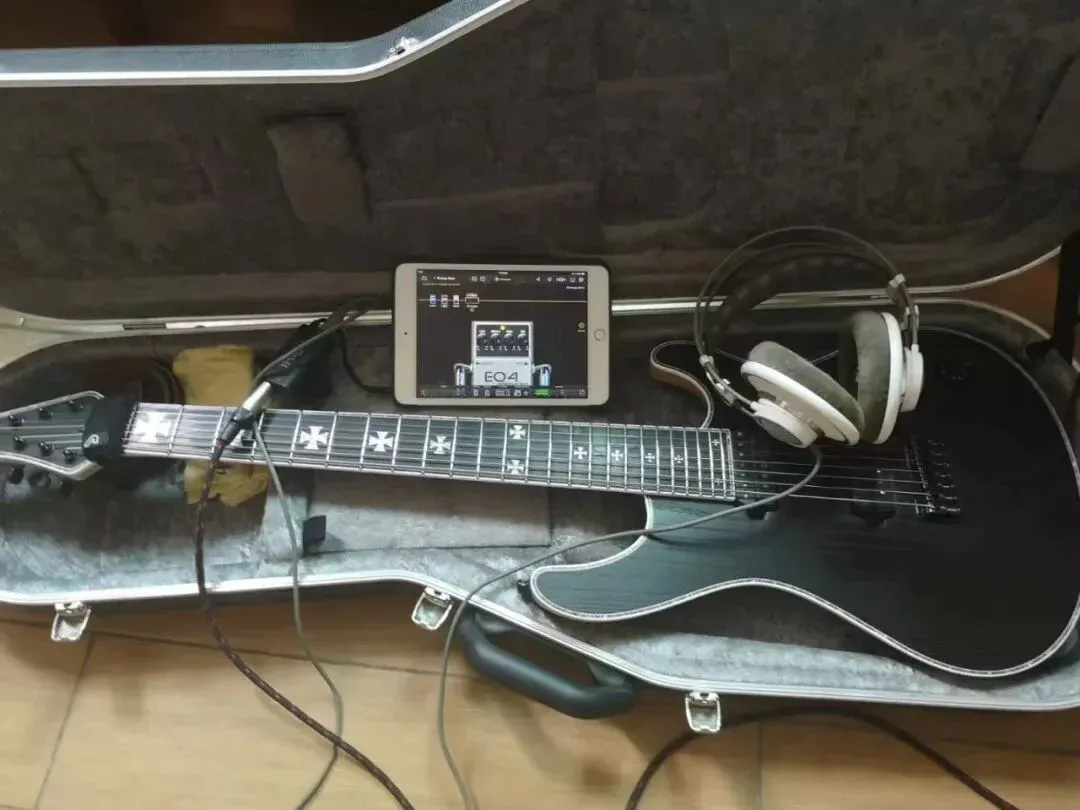
Mr. Guo’s piano (old photo)
Musicians as Architects
What does this striking “isomorphism” reveal? It shows that an excellent musician is essentially already a “system architect.” What you’ve been training for years is how to combine tiny units (notes) into meaningful, reusable, scalable grand structures (movements). This “bottom-up” building capability and “top-down” decomposition thinking is the core competency of software engineering. What you’ve been missing was never logic — just “syntax” — and that’s precisely the cheapest thing in the AI era.
2. Meso-Isomorphism (Part 1) — “Chords” as “Functions,” “Forms” as “Frameworks”
If “movements” are “horizontal” temporal structures, the “vertical” abstraction is even more exquisite.
“Chord” is “Function.” A C major chord simultaneously combines C, E, G notes to produce a new “sonic effect,” and when chords flow horizontally, they simultaneously define function for each chord. A calculateTotal() function also combines a series of logic “in one call” to produce a new “functionality.” Composers thinking about “C chord,” programmers thinking about calculateTotal() — both are invoking an “abstract” encapsulation.
“Musical Form” is “Framework.” Whether “12-bar blues,” “sonata form,” or “verse-chorus” structure — they’re all like React or Flask frameworks: “semi-finished skeletons.” They exist to increase efficiency, provide standards, and reuse patterns. You no longer need to invent wheels from scratch — just “fill in” your own “melody” (business logic) within existing “frameworks.”
3. Meso-Isomorphism (Part 2) — “Instruments” as “Tech Stack”
We have structure and frameworks, but ultimately need “tools” to “perform” them.
“Instruments” are “Tech Stack.”
Each tool has unique “timbre” (characteristics) and best-suited “style” (task domain).
-
Python vs. Piano: Both are “kings of instruments.” Wide range, rich expressiveness, can “solo” (write scripts) or carry “concertos” (large backends). Both are foundational in their worlds (classical music/data science), virtually omnipotent.
-
JavaScript vs. Electric Guitar (with Pedals): Core of modern “pop music” (Web). Guitar alone is strong, but real magic comes with a full set of “effects pedals” (React, Vue, Node.js ecosystem). Using
Reactis like a guitarist stepping on “reverb” + “distortion” pedals — you get a specific style of “tone” (Web App architecture). -
Swift / Kotlin vs. Violin / Cello: Pillars of “symphony orchestras” (Apple/Google native ecosystems). Beautiful tone, extreme performance, designed to produce the most perfect sound in “Apple Concert Hall” or “Google Opera House.”
-
SQL vs. Bass & Drums: The “rhythm section,” the stable foundation of the entire piece. They don’t handle flashy front-end “melody,” but all “data” (rhythm) structure and stability. Without them, everything falls apart.
As a musician, my brain naturally has an “orchestration” mental model. I instinctively know you can’t use a “tuba” (COBOL?) for “cadenzas” (beautiful UI); I naturally know a “rock band” (Web app) needs guitar, bass, and drums in coordination.
I skipped the pointless “which language is best” debate and went straight to architect thinking: “How should I organize my ‘orchestra’ (tech stack) to perform this ‘piece’ (product) well?“
4. Macro-Isomorphism — “Composer” and “Conductor” Collaboration
When a “piece” (product) scales to “symphony orchestra” (large project) complexity, role division emerges. And this division maps strikingly onto software engineering collaboration patterns.
“Composer” ≈ “Technical Product Manager”
- The Composer (PM) is “The Author,” answering “Why” and “What.”
- Their output is a detailed “Score” — this is our “PRD” (Product Requirements Document).
- A poor composer writes notes violins can’t play (doesn’t understand “instruments” = doesn’t understand “tech”).
- A great composer (PM), when writing the “Score” (PRD), must master “orchestration” (deeply understanding technology’s capability boundaries, costs, and characteristics). When designing requirements, they’ve already figured out “what tech stack (instrumentation) is most reasonable for implementing this feature (melody).”
“Conductor” ≈ “Tech Lead / Architect”
- The Conductor (TA) is “The Interpreter & Executor,” answering “How.”
- After receiving the “Score” (PRD), their first task is “score reading” — deeply understanding the composer’s (PM’s) “intent.”
- Second task: decompose the “full score” into “parts” for violins, brass. This is the architect’s “module decomposition” (Microservices / Components).
- Third task: stand on the podium, not playing violin themselves, but ensuring the “violin section” (frontend team) and “percussion section” (backend team) play on beat, harmoniously (in tune). This is the architect’s entire job — ensuring smooth “inter-module communication,” ultimately serving the unified expression of the product (piece).
A great product (performance) is absolutely the result of deep resonance and mutual achievement between composer (PM) and conductor (TA).
AI’s Role — The “Jazz Master” Unleashing Code Productivity
Now, placing AI back in this “orchestra,” its role becomes crystal clear.
AI (Copilot / Atlas Agent) is neither composer (PM) nor conductor (TA). It’s more like the orchestra’s “principal player,” or a guest “Virtuoso Soloist.”
In the AI era, our workflow is shifting from “classical music” to “jazz.”
-
Classical Mode (Traditional Development): Composer (PM) writes every note rigidly (waterfall PRD), performers (Coders) must replicate 100% perfectly. Creation and execution are completely separated.
-
Jazz Mode (Vibe Coding): We no longer need perfect “scores.” We just need a “chord framework” (Vibe or intent). Then we (Vibe Coders) and AI (improvisation masters) start “jamming.”
This is what I, a musician, product person, and Vibe Coder, understood after the AI explosion:
AI plays the “liberator.” It freed me from the heavy physical form of “classical performer” (must perfectly master various languages, libraries, syntax) to directly become a “jazz musician” (Vibe Coder), letting me 100% focus on what I do best — “creating” and “exploring.”
But I’m not saying foundational learning is unimportant. Even today, I carve out time to study official React documentation based on real business needs, trying to deeply understand rather than just apply. Jazz musicians without good theoretical foundations only mechanically repeat “muscle habits.”
In the AI era, the “deep structural thinking” you’ve accumulated in any field (whether music, law, architecture, or literature) is your most valuable asset. AI just helps demolish the wall of “syntax barriers,” letting your soul construct movements more freely in any domain.
Closing Thoughts:
Notes are essentially symbols abstracting physical quantities like “vibration frequency” and “vibration duration” under a standardized “syntax.” Composition depends not on letting thoughts drift with inspiration, but on concrete forms organized with standards and logic.
Outsiders usually think music is literary, emotional, artistic, abstract. In reality, music is fundamentally physical, logical, concrete. Ultimately, music is physics. Music is mathematics.
This is the final closed loop of that “isomorphism” I understood.
The reason we can draw an equals sign between these two seemingly vastly different domains (music and IT) is because they share a solid, cold, “hardcore” foundation built of logic and mathematics. A great composer and a great programmer — their brains do the same thing: within strict “rule” constraints, finding the optimal “structural” combination to achieve the most elegant “functional expression.”
This also explains why I, a musician, could resonate so quickly with the world of code after the AI explosion. I’d already practiced countless times on staff paper: “abstraction,” “encapsulation,” “structuring,” and “systems thinking.”
AI plays the role of that “translator.” It helped me bridge the surface “syntax” gap between print(“Hello World”) and C-G-Am-F, letting me pour my already internalized musical soul directly onto the “score” of software engineering.
So, if you also come from a non-technical background — whether music, law, architecture, or literature — cherish the “deep structural thinking” from your field. That’s your most valuable asset in the AI era. AI just helps demolish the wall of “syntax barriers,” letting your soul construct your own movements more freely in any domain.
Found Mr. Guo’s analysis insightful? Drop a 👍 and share with more friends who need it!
Follow my channel to explore AI, going global, and digital marketing’s infinite possibilities together.
🌌 AI demolished the wall of “syntax,” letting the soul of “structure” flow freely.
