
Introduction: The Indie Developer’s Going-Global “Lost at Sea”—Why Does Your Effort Never Match Returns?
As an indie developer or small team founder, do you often feel confused: you burned midnight oil polishing a product, confidently pushed it to overseas markets, only to watch it sink without a trace? Why won’t Google index your site? Why do thousands of carefully written articles still bring single-digit traffic? Why did your big Product Hunt bet leave only scattered feathers after the excitement? These questions come up almost daily in my conversations with indie developers. Today, let’s systematically sort through these common “pitfalls” on the going-global journey and explore how to precisely avoid them, so your efforts aren’t wasted.
First, A Cautionary Tale:
Theory without examples is empty. This screenshot from a certain tool clearly records a website’s “death march” from decent traffic to near-zero (key info redacted). We can see organic search traffic plummeted 85% in one month, keyword count sharply declined. The bottom-right traffic curve is shocking—after a critical point, traffic fell like a free-falling object.
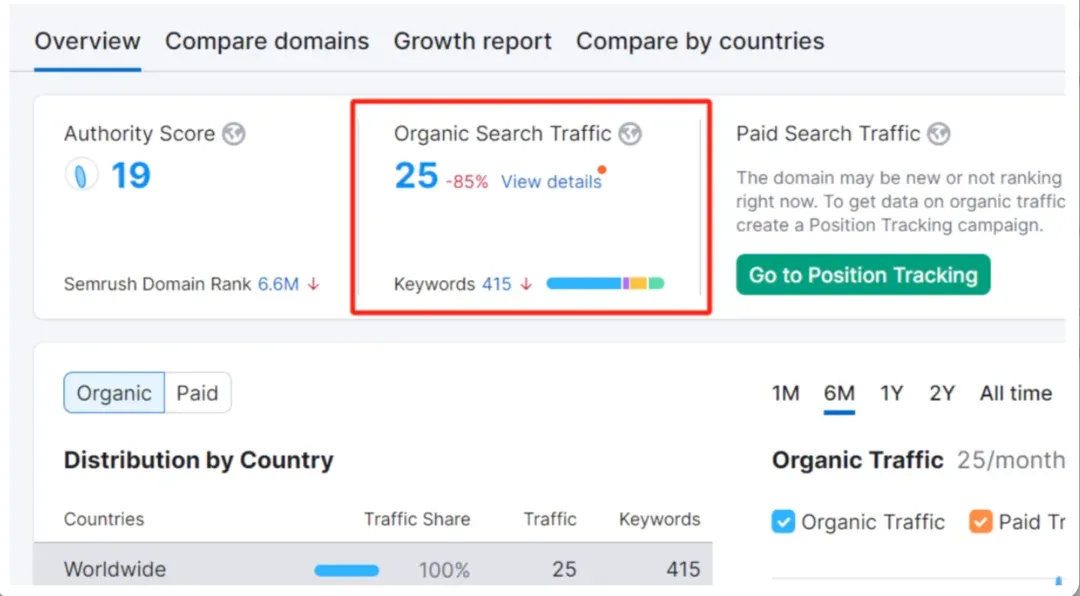
(Illustration: A website’s cliff-dive in organic search traffic)
Such “tragedies” play out daily, potentially caused by catastrophic site redesigns, Google algorithm update penalties, major technical SEO failures, or malicious attacks. This case bloodily tells us: every SEO step requires walking on thin ice.
The Right Approach:
A tool project I previously wrote about pursued rapid launch initially (built with “Vibe Coding” mode). Post-launch was a mess—307 redirects abused, 404 pages everywhere, URL rules chaotic… Early GSC data was miserable, with painfully slow indexing and traffic growth.
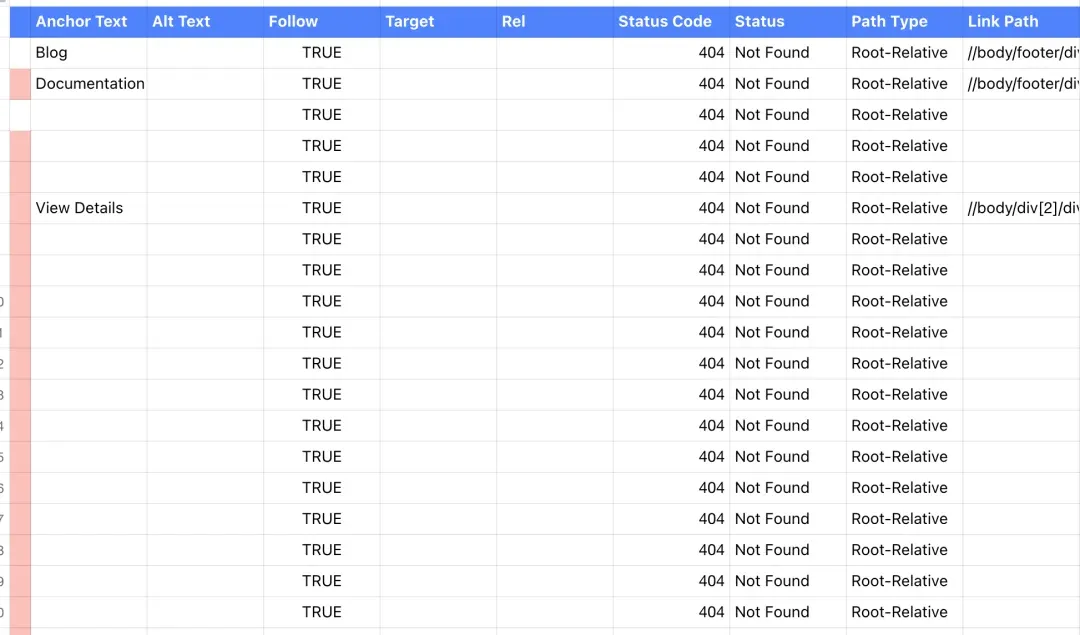
Early SEO foundation problems
Fortunately, I understood these issues’ fatal nature and, with my dev partner, invested heavily in systematic SEO technical overhaul: thoroughly checked and fixed all erroneous 307 redirects, comprehensively cleaned up 404 pages with proper handling, unified and standardized site-wide URL structure… After completing this seemingly basic work, effects were immediate (key info redacted).
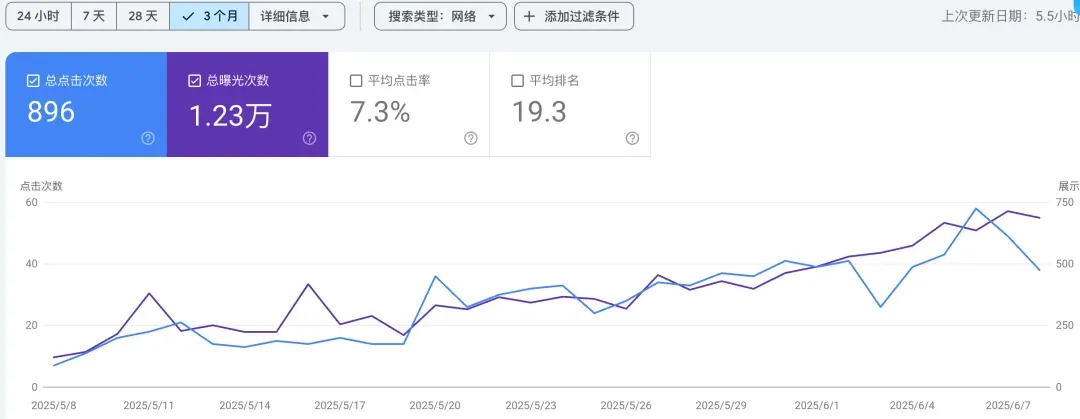
(Illustration: Steady GSC data improvement after project SEO overhaul)
This personal experience tells us: often, building solid SEO foundations matters far more than chasing so-called “black magic.”
Common Pitfall One: Ignoring SEO Fundamentals
SEO—that word making countless indie developers love and hate. Seems low-barrier but runs deep. Often it’s not that Google doesn’t love you, but your website “self-destructed” with a pile of problems:
-
Indexing Woes: Check if your
robots.txtaccidentally saysDisallow: /? Or key pages havenoindextags? Is sitemap.xml submitted to Google Search Console and kept current? Is content quality so low even crawlers “can’t bear to read”? Is server response stable and fast? These are indexing prerequisites. -
307’s “Temporary” Tragedy: I’ve seen too many developers misuse 307 temporary redirects for scenarios requiring 301 permanent redirects (like domain changes, URL structure adjustments). Google treats old URL authority as only temporarily transferred—long-term, new URLs can’t effectively inherit authority. Remember, unless truly temporary, firmly use 301.
-
404s Everywhere: After site redesigns or page deletions, leaving massive dead links (404 pages) is taboo. This severely damages user experience and makes search engines view your site as poorly maintained, reducing trust. Regular 404 checks and fixes, or 301 redirecting invalid URLs to relevant pages, is required homework.
-
Canonical Tags’ “Invisible Guardian”: When your site has multiple highly similar or duplicate URLs (e.g., parameterized URLs, print pages),
rel="canonical"tags clearly tell search engines which is the “official” version, avoiding authority dispersion and duplicate content penalties. Not using or misusing them brings endless trouble. -
URL “Uniformity OCD”: Is your site
www.example.comorexample.com? Do URLs consistently end with/or not? Is letter casing consistent? These seemingly tiny details, without unified normalization (usually via server config or 301 redirects), make search engines treat them as different pages, dispersing authority. Pick one standard and stick to it.
Pitfall Avoidance Guide: Regularly use Google Search Console to check site health, focusing on index coverage and crawl error reports. Use Screaming Frog, Ahrefs Site Audit, and similar tools for comprehensive SEO technical diagnosis. Solid foundations matter far more than chasing tricks.
Common Pitfall Two: Abusing Programmatic SEO (PSEO)
Behind “thousands of articles without traffic,” besides traditional content strategy failures, lurks a more hidden yet tempting trap: Programmatic SEO (PSEO) abuse. Many developers hope to use technical means to batch-generate massive pages, quickly covering numerous long-tail keywords. PSEO isn’t inherently evil—used well, it multiplies efficiency; out of control, it becomes traffic’s graveyard.
-
The “Too Much” Threshold: Every SEO strategy has boundaries. When PSEO devolves into unlimited page duplication, keyword stuffing, and low-quality content splicing, it crosses Google’s tolerance line. Short-term may show false prosperity, but algorithm’s iron fist eventually falls, causing ranking drops or entire site penalties.
-
Value’s Core Question: PSEO’s true value isn’t “batch page production” as technique, but “how to batch-generate pages truly valuable to users.” If your programmatic content merely rewrites existing information, substitutes synonyms, or generates structurally similar, informationally redundant “shell” pages for different regions—no matter how many generated, sustained organic traffic remains elusive.
PSEO Pitfall Avoidance and Proper Use Guide:
- Focus on Value, Not Quantity: Consider whether your PSEO strategy provides unique perspectives, more convenient information integration, or personalized solutions.
- Data-Driven, Precise Targeting: Based on deep keyword research and user needs analysis, find long-tail demand gaps truly suitable for programmatic satisfaction.
- Template Quality and Content Differentiation: Carefully design high-quality page templates, ensuring programmatic content has sufficient core information differentiation and uniqueness.
Common Pitfall Three: Blind Faith in Product Hunt’s “Overnight Fame” Myth
Product Hunt (PH) is many indie developers’ “traffic holy land,” hoping to explode overnight through it. But reality is often harsh. To correctly understand PH:
-
PH’s True Positioning and User Profile: PH is essentially an early tech product discovery and sharing community—users are mostly developers, designers, PMs, investors, and tech enthusiasts. Though exposure is considerable, these “geek” users may differ from your product’s real target users. Expecting PH to bring masses of precise end-users often disappoints.
-
Launch Timing: MVP Touchstone vs. PMF Booster: For very early MVPs, PH can be a channel for initial feedback and concept validation. But for significant user growth and commercial returns, products ideally should have certain completion, even initial PMF validation. PH is more booster than 0-to-1 incubator.
-
“Vote Manipulation” Futility and Algorithm Wisdom: PH’s algorithm and community operations are smarter than imagined. Pure vote manipulation and cheating for short-term rankings not only risks detection and negative consequences but even lucky high rankings bring mostly “invalid traffic” with minimal long-term product value.
PH Pitfall Avoidance and Proper Use Guide: Clarify PH’s value expectations—treat it as one channel for early exposure, feedback gathering, and industry reputation building. Carefully prepare launch materials, sincerely engage with community. More importantly, effectively guide and settle PH’s short-term heat into your private traffic pool and user lifecycle management.
More Common “Minefields”: From UX to Localization, Details You Might Overlook
Beyond the above major myths, indie developers often “crash” on these details during going-global:
-
UX’s “Three Dismissals”: Website slow as a snail (especially for overseas user access), terrible mobile adaptation, registration/purchase flow with 18 twists. Users’ time and patience are extremely limited.
-
Localization’s “Wishful Thinking”: Think translating interface to English is enough? Is language idiomatic, culture respected, payment convenient, timezone measurements accurate? These are devil’s details.
-
Data Analysis “Blind Eyes”: Installed Google Analytics but never look, or only check PV/UV for fun. Not knowing how to track user behavior, analyze conversion funnels, or discover product issues makes optimization impossible.
These seemingly trivial problems, accumulated, become the last straw breaking the camel’s back.
Return to Essence: Indie Developer Going-Global “Survival Rules” and “Growth Righteousness”
Cutting through fog, indie developers on the going-global journey should truly uphold simple yet powerful principles:
-
User First, Value Is King: What real pain points does your product solve? What irreplaceable value does it provide? This is all growth’s starting point.
-
Solid Foundation, Continuous Iteration: Technical architecture, code quality, SEO standards, content depth… These “slow work” are core competitiveness. Small quick steps, continuous optimization.
-
Data-Driven, Farewell Guessing: Learn to use data to insight user behavior, validate product hypotheses, guide operational decisions. Make every adjustment targeted.
-
Focus on Core, Know What Not to Do: Indie developers have limited resources—focus on what you’re best at and can create most value, don’t blindly expand or chase every hot topic.
-
Embrace Learning, Stay Humble: Going-global markets change rapidly—new tech, channels, user habits emerge constantly. Maintaining curiosity and learning ability is key to survival and development.
-
Long-termism, Accept Ordinariness: Growth is a marathon, not sprint. View temporary ups and downs with equanimity, persist in doing right things, wait for flowers to bloom.
Conclusion: Farewell “Wasted Effort,” Let the World See Your Great Product
Going global as an indie developer is long and challenging, yet full of opportunity. Avoid those common “pitfalls,” return to business and product essence, polish every detail with professional spirit—your great product will definitely cross mountains and seas to be seen and loved by the broader world.
Found this insightful? Give it a thumbs up and share with more friends who need it!
May everyone who crafts products with care find their own sea of stars.
