
By Mr. Guo
Intro: Why the AI Products You “Copied” All Died
Let’s talk about something politically incorrect: copying. In AI, the iteration cycle is counted in months. You spot an AI agent or PPT tool going viral, spend two months cloning every pixel, and guess what—you’re still stuck while the original keeps flying.
Why? Because most people do competitive analysis wrong. They get trapped in static imitation—copying the outcome, ignoring the real drivers of success: the timing (When) and market gap (Why).
Today I’m breaking down the “right posture” for competitor analysis using my favorite model: Dao (Way), Fa (Framework), Qi (Tools), Shu (Techniques). This isn’t about copying better; it’s about sensing timing, spotting gaps, and finding a battlefield where you can actually win.
Chapter 1: Dao — Philosophy (From Static Mimicry to Dynamic Insight)
Key point: In the AI era, competitive analysis is about insight, not imitation.
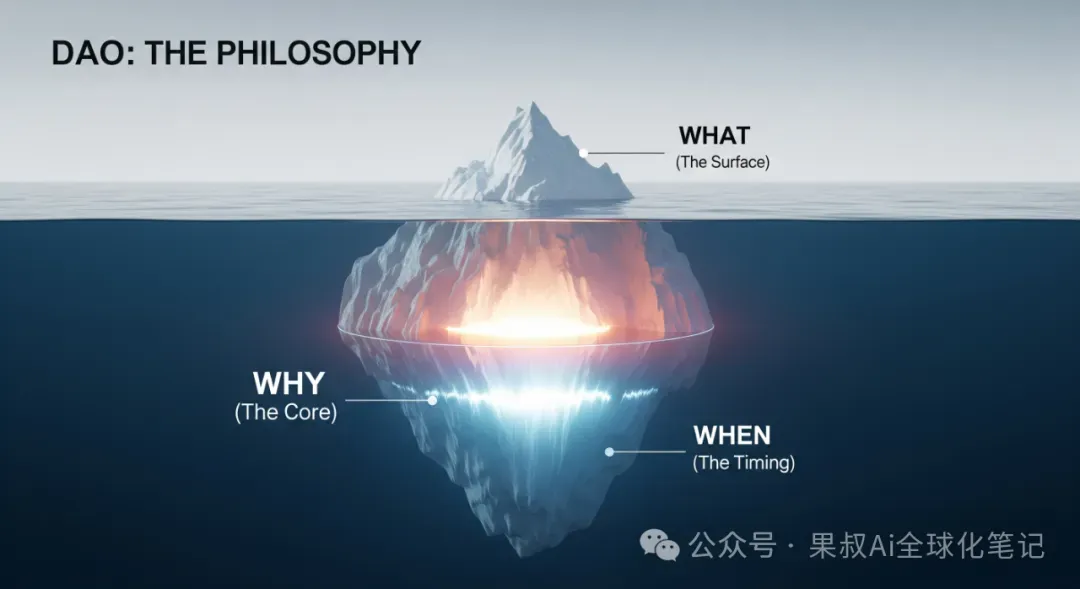
The trap of static copying
- You only saw
nanobanana.aitake off, but missed that its real win was grabbing the domain and riding a timing wave. If you fight today with the same playbook, you lose.
The “Way” of dynamic insight
Ask a competitor not, “Can I do this too?” but:
- What did they do right in that environment?
- What new weaknesses are exposed in today’s environment?
- When new models drop, how will the market reshape?
Bottom line: Treat competitors as time slices. Understand their past to forecast your future. Markets move through a four-dimensional spacetime; don’t analyze them with Newtonian, static logic.
Chapter 2: Fa — Framework (The Five-Dimensional Lens)
If the “Way” is dynamic insight, our method must go beyond feature lists. I call it the Five-Dimensional Spacetime Framework.
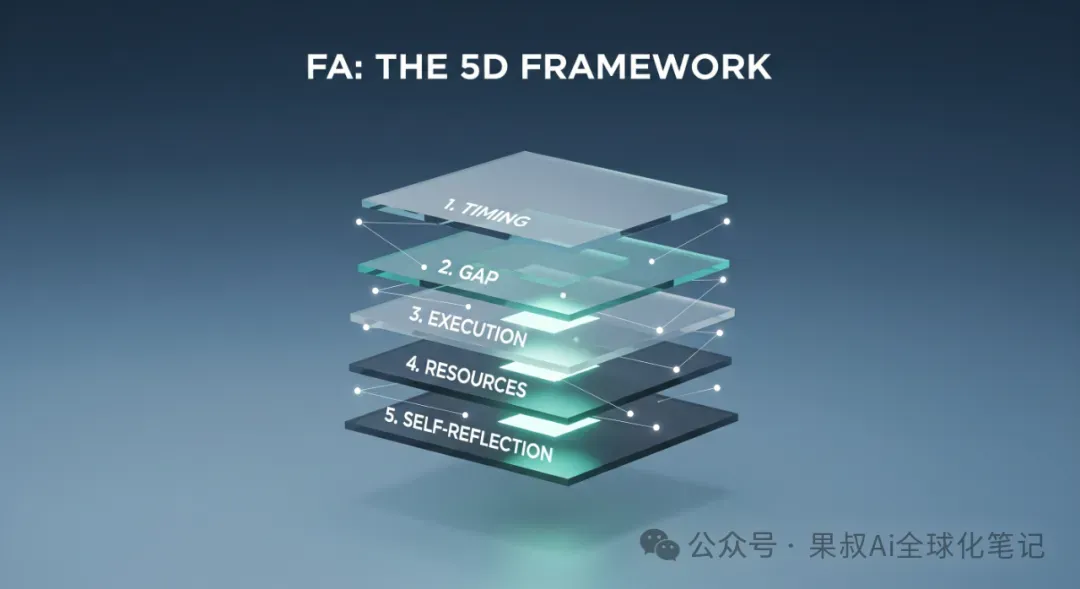
Dimension 1: Timing
- When did they enter? Blue ocean or bloodbath?
- What tech/model tailwind existed (GPT-3.5 wrappers vs. RAG-ready era)?
Dimension 2: Opportunity
- What gap did they spot? Vertical pains (like my AI audio niche) or distribution arbitrage (SEO/GEO)?
- How did they sense it (community complaints, founder pain)?
Dimension 3: Execution
- What decisions were pivotal (pricing, channel, roadmap)?
- Where are they weak?
Dimension 4: Resources
- Founder background? AI prodigy or marketing beast?
- Resources deployed (funded vs. side project)?
Dimension 5: Self-reflection
- Can you match those resources? If not, what edge do you have?
Chapter 3: Qi — Tools (The Vibe Coder Recon Arsenal)
Knowing the framework isn’t enough—we need tools. Your kit can’t stop at Similarweb.
1. Traditional recon (traffic)
Similarweb, Ahrefs, Google Trends: dissect traffic streams. Don’t just look at volume—watch trendlines, inflection points, align them with the tech era.
2. Frontline intel (word of mouth)
Product Hunt: read Launch Day comments, not just votes. Negative comments reveal unmet needs.
Reddit / X / Indie Hackers: search "[competitor] + problem" or "[competitor] + I wish"; these threads are gold.
3. Time machine (evolution)
Wayback Machine: see their landing page 6 months ago. What slogan changed? What feature was removed? Change == paid learning.
4. AI staff officer (strategy)
Ask Perplexity or ChatGPT for “Best alternative to [competitor]” or “How does [competitor] solve [problem]?” See how AI engines position them.
Chapter 4: Shu — Tactics (Four Peel-Back Plays)
Tactics turn insight into action.
Tactic 1: Study the founder, not just the product
Follow them on X. Their builder rants reveal more than the About page.
Tactic 2: Become their pickiest user, then refund
Subscribe, use everything for three days, then request a refund. The churn-reason dropdowns expose what they fear most.
Tactic 3: Draw a resource contrast chart
Left (they have/I don’t): cash, engineers, SEO. Right (I have/they don’t): vertical expertise, marketing edge, willingness to run lean. Your opportunity lives on the right.
Tactic 4: Design a Minimum Viable Test around their weakness
Instead of cloning everything, attack the weakness: e.g., ship a landing page with extreme SEO polish for their core keyword and see if you siphon traffic in a week.
Conclusion: Analyze to Avoid, Not Mimic
We dissect competitors not to clone them, but to avoid them. Static copying pits your amateur against their professional, your present against their past.
The real aim is to find the niche they ignore, disdain, or can’t turn quickly enough. That’s where your asymmetric edge lives—be it SEO prowess or domain expertise.
My builder mantra: pursue every project with resolve, accept worst-case outcomes with stoic calm. Entrepreneurship isn’t gambling; never go all-in. Invest your money and time rationally.
When you analyze this deeply, every strike is intentional, not blind.
If this breakdown sparked insight, tap 👍 and share with friends who need it.
Follow my newsletter for more on AI, global growth, and digital strategy.
🌌 Your chance isn’t in walking someone else’s path—it’s in seeing why they walked it, then carving your own.
