
Word count: ~3400 words
Estimated reading time: ~12 minutes
Last updated: August 12, 2025
Chapter Contents
-
Preface: The Most Misunderstood “Power Game” in SEO
-
Chapter 1: Back to First Principles — Do You Still Need Backlinks in the AI Era?
-
Chapter 2: Anatomy — Three Core Characteristics of a “High-Value Backlink”
-
Chapter 3: Mindset Shift — From “Building Links” to “Earning Links”
-
Chapter 4: “Link Magnets” — Your Content Assets Are the Best Link Bait
-
Chapter 5: The “Litmus Test” — How to Quickly Evaluate a Link Opportunity’s Value
-
Chapter 6: Measuring Value — How to Assess a Single Backlink’s Real ROI
-
Conclusion & Preview: Your Value Is the Magnet; Outreach Just Makes It Visible
Preface: The Most Misunderstood “Power Game” in SEO
Hey, I’m Mr. Guo. Finally back to our SEO practice handbook. In the beginner series, we focused on cultivating “internal skills” — polishing the site’s technical foundation, content strategy, and production system. Now it’s time to look outward and learn how to build our website’s “reputation” and “authority” across the vast internet.
And this all revolves around the most powerful, most effective, yet also most misunderstood and abused concept in SEO — Backlinks.
Backlinks are a “power game” full of temptation and danger. Countless developers either completely ignore it out of fear of its complexity and risk, missing huge growth opportunities; or fall into the “black hat” trap of buying links and link exchanges seeking shortcuts, ultimately getting their sites penalized.
Many think SEO has “deep water” largely because of backlinks. Compared to other SEO aspects, link value is never easy to “quantify precisely.” Therefore, correctly viewing backlink value is essential “mindset” training before we proceed.
Chapter 1: Back to First Principles — Do You Still Need Backlinks in the AI Era?
This is an excellent question, especially today when AI can generate massive content at unprecedented speed. Many believe that since content can be infinitely produced, will backlinks become less important?
The answer is exactly opposite: In the information explosion era, high-quality backlinks as “trust signals” haven’t decreased in value — they’ve become even more critical. More precisely, the AI era is dramatically widening the value gap between “good links” and “bad links.” High-value backlinks’ importance is amplified like never before, while low-value, irrelevant links approach zero value — or negative.
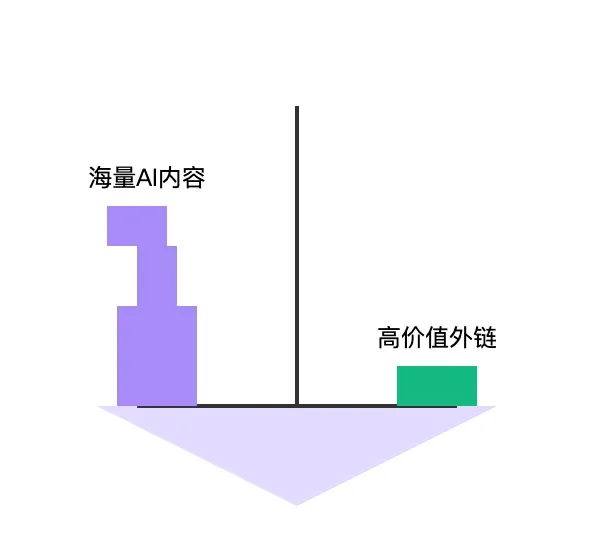
Note that I’m saying high-quality links are more valuable, while low-quality or “ordinary” links have become even less important.
Let’s think from first principles. Google’s founders Larry Page and Sergey Brin were originally inspired by academic paper citation systems. They viewed the entire internet as a massive academic network:
A website is a “paper.” A backlink is a “citation.”
A paper frequently cited by top journals like Nature or Science (high-authority websites) has far greater academic standing and credibility than one only cited by obscure journals or not cited at all. This logic remains the foundation of Google’s PageRank algorithm today.
This logic is further strengthened in the GEO (Generative Engine Optimization) era. When AI models generate answers, one core mechanism is RAG (Retrieval Augmented Generation), where they prioritize retrieving and citing content from authoritative, trustworthy sources like a rigorous scholar. A high-quality backlink from an industry-leading website is strong proof that your content deserves to be selected as a “reference answer” in AI’s “open-book exam.” Therefore, link building is no longer just for traditional PageRank — it’s about becoming a trustworthy knowledge source in the future AI ecosystem.
Chapter 2: Anatomy — Three Core Characteristics of a “High-Value Backlink”
Not all links are created equal. A link from a low-quality link farm might have negative value. Learning to analyze and evaluate a backlink’s value like Google’s quality raters is essential. A high-value backlink typically has three core characteristics:
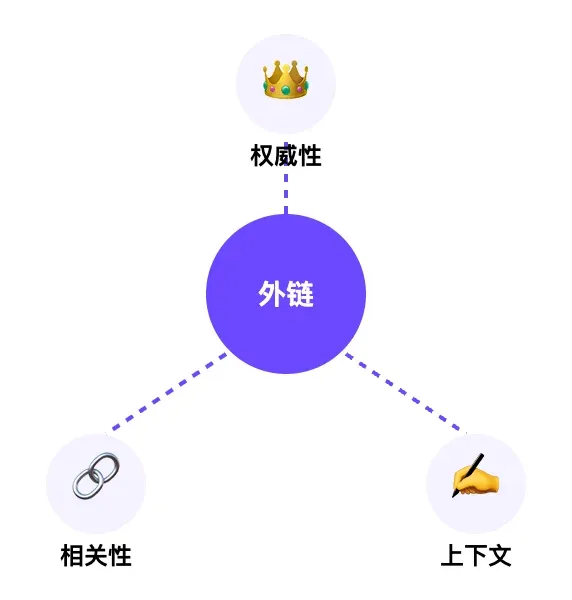
- Relevance:
This is the most important criterion. A link from an authoritative “music production” blog pointing to your “AI Singer” product page is worth far more than one from a “pet food” website, even if the latter has higher domain authority. Google evaluates whether the linking site, linking page, and your target page share thematic alignment.
- Authority:
Is the linking site itself a “thought leader” in its field? We can use third-party tools (Ahrefs’ DR, Moz’s DA) to roughly assess a site’s authority. But remember, these are just references, not absolute truth. A niche blog everyone in the industry knows, with DR of only 30, might be worth far more than a DR 70 general news portal.
- Context:
How is the link placed? A link naturally appearing in body text with descriptive anchor text (like “a powerful AI singer generator”) is worth far more than one dumped in a “friends links” section at page bottom. Context reflects the link’s “editorial recommendation” attribute.
Chapter 3: Mindset Shift — From “Building Links” to “Earning Links”
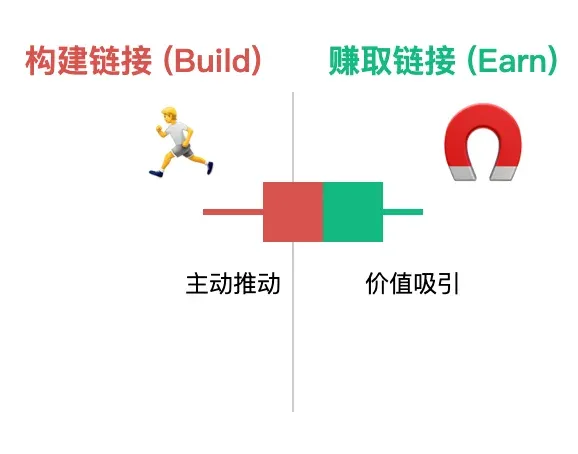
This is the most important “mindset upgrade” in this article. From today, I want you to replace “Link Building” with “Link Earning” in your vocabulary.
“Building” implies something you can proactively, even forcibly “construct” — easily leading to buying links, PBNs, and other black hat behaviors. “Earning” means this is a “reward” you must win through your own value and effort.
This mindset shift changes the core question you ask when facing any link opportunity from:
“How can I get a link from this website?”
to:
“What can I create that makes this website’s editors and readers feel linking to me is natural — even something worth showing off?”
Chapter 4: “Link Magnets” — Your Content Assets Are the Best Link Bait
To “earn” links, you must have “assets” worth linking to. These are what we call “Linkable Assets.” Good news: if you’ve studied our beginner series carefully, you already have the complete toolkit to create these magnets.
Here are several highly effective “link magnet” types:
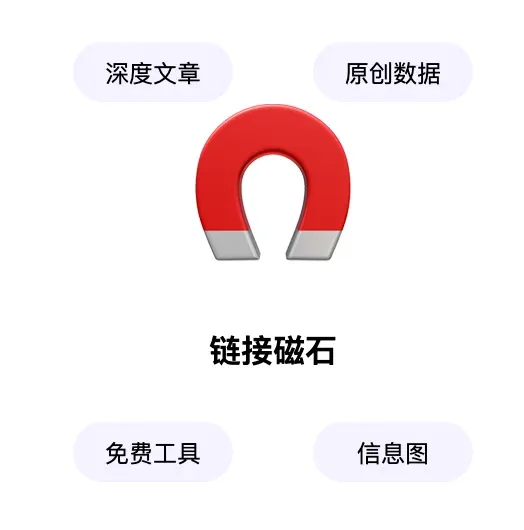
- Original Data and Research Reports:
This is the most powerful magnet. A report based on your product data or industry research, once published, becomes the “original source” for journalists, bloggers, and researchers to cite.
- Deep SOPs and Ultimate Guides:
Those deep SOP articles from our beginner series are excellent link magnets themselves. They provide “one-stop” solutions for complex problems.
- Free Tools and Interactive Applications:
That “SERP Analysis Helper” we created by empowering infographics with AI is a perfect example. A useful small tool is far easier to get recommendation links than 10 ordinary articles.
- Original Infographics and Visual Assets:
A well-designed, information-rich infographic spreads easily on social media and gets embedded in other bloggers’ articles (with source links).
Chapter 5: The “Litmus Test” — How to Quickly Evaluate a Link Opportunity’s Value
When you discover a potential link opportunity (say, a blog invites you to write a guest post), you need a quick “litmus test” to judge if it’s worth your precious time.
Forget complex tools and metrics — ask yourself three soul-searching questions:
- “Would I proudly show this link to my users and investors?”
If the answer is no, it’s probably a low-quality link you shouldn’t pursue.
- “Does this website actually have live readers interested in my product?”
Browse their other articles and check comment section engagement. A site without real readers has extremely limited link value.
- “If a Google manual reviewer saw this link, would they think it’s a natural recommendation or paid advertising?”
This thought experiment helps you judge if the link meets Google’s quality guidelines.
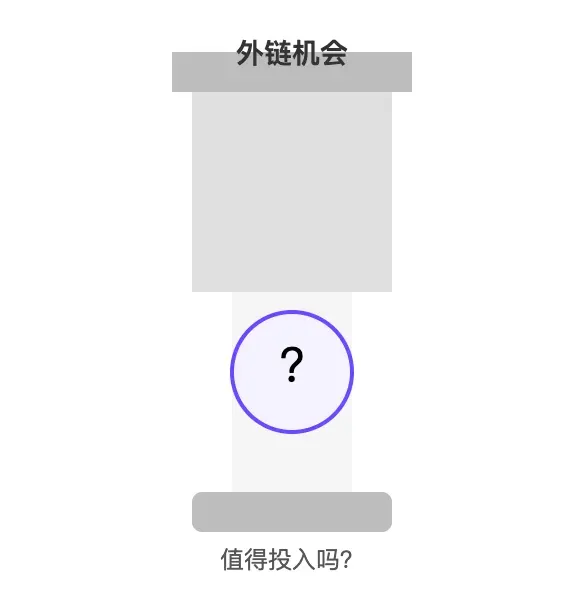
Chapter 6: Measuring Value — How to Assess a Single Backlink’s Real ROI
This is the hardest yet most important part of link building: measuring ROI. Many newcomers expect linear, immediate feedback — exactly the biggest mistake.
First, you must tie evaluation criteria to your direct purpose:
- If your goal is referral traffic:
The evaluation is very direct — via Google Analytics, see how much direct, quality traffic this link brought you in the following week or month.
- If your goal is SEO reputation (Authority & Ranking):
This is more common and harder to measure. You must abandon the mistaken expectation: “I added one DR 80 backlink — why didn’t my Semrush AS score change?”
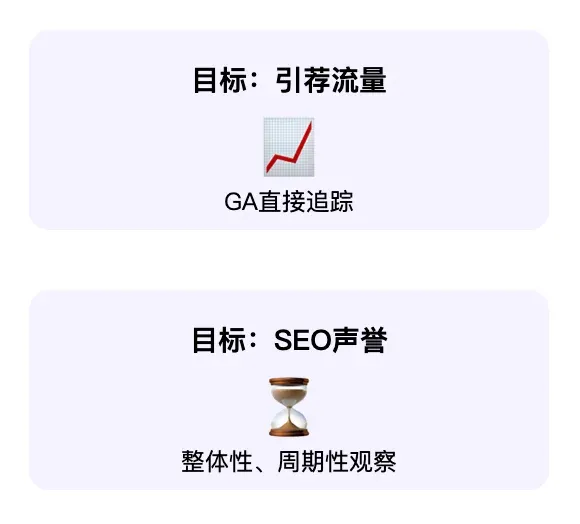
The correct evaluation is holistic, periodic observation. Think: “This month, through our efforts, we obtained 5 high-quality backlinks from authoritative music blogs for the ‘AI Singer’ topic cluster. In the next 1-3 months, let’s observe: has the average keyword ranking, organic traffic, and indexing speed for all pages in this topic cluster improved overall?” Backlink effects are indirect and lagged — like “charging” your website. When fully charged, all “appliances” perform better.
Conclusion & Preview: Your Value Is the Magnet; Outreach Just Makes It Visible
Today, we’ve built a new “philosophy” for link building. Its core can be summarized as the 90/10 rule: Invest 90% of your energy creating truly valuable “link magnets”; use only the remaining 10% to precisely place these magnets where “iron filings” (potential linkers) can see them.
Your value is the source of the magnetic field that attracts links.
Now that we’ve mastered solid “philosophy,” in the next article we’ll dive into specific “techniques” — a practical white-hat link building handbook designed specifically for indie developers. We’ll learn how to transform our “link magnets” step by step into website authority growth.
Found Mr. Guo’s analysis insightful? Drop a 👍 and share with more friends who need it!
Follow my channel to build your growth system together.
🌌 Value is the star — its own gravity makes planets (links) orbit around it.
For the execution side, see my AI-powered backlink prospecting workflow.
