
Word count: ~2900 words
Estimated reading time: ~10 minutes
Last updated: October 09, 2025
Is This Article for You?
If you’re an AI entrepreneur, developer, product manager, or investor, and you care not just about “what new features were released” but “what’s the strategic intent behind this release? How will it change the game? How should I act?” — then this strategic guide is for you.
Core Takeaways
✅ Strategic Deconstruction: Why is AgentKit OpenAI’s “strategic moat” against model commoditization?
✅ Arsenal Analysis: Deep dive into Agent Builder, Agents SDK, ChatKit, Evals, and other core components.
✅ Builder’s Playbook: A directly actionable AgentKit handbook with real cases and iteration frameworks.
✅ Ecosystem Competition: Analysis of AgentKit’s competitive and coexistence relationships with LangChain, n8n, and other existing tools.
Introduction: OpenAI’s “Blitzkrieg” and Your “Action Manual”
Hey, I’m Mr. Guo. Recently, OpenAI dropped a bombshell: AgentKit.
If you see this as just another developer tool update, you’re dead wrong. This isn’t a product iteration — it’s a carefully planned “blitzkrieg” targeting the AI middle layer.
Before AgentKit, we AI Builders struggled in “development chaos” — fragmented open-source libraries on one side, endless “glue code” on the other, version control a mess, proper evaluation entirely manual. Getting a production-grade Agent from idea to launch taking several quarters was routine. AgentKit exists to end this chaos. It’s not a tool — it’s a unified, end-to-end platform from prototype to production, an “AI agent assembly line.” Its core value proposition is brutally simple: Shrink development work that used to take months into hours.
This report is the strategic guide I’ve prepared for you. I’ll thoroughly deconstruct AgentKit’s arsenal, analyze its ecosystem ambitions, and provide a Builder’s Playbook you can copy directly. Let’s begin.
1. Paradigm Shift in Agents: Understanding AgentKit’s Core Value
1.1 From Fragmented Tools to Unified Platform: Ending “Development Chaos”
Before AgentKit, building an Agent was like assembling a machine without blueprints using parts scavenged from everywhere. Complex orchestration, custom connectors, manual evaluation, endless prompt tuning, and weeks of frontend work. This inherent complexity was the core bottleneck preventing Agent scaling. AgentKit’s mission is to integrate this entire development lifecycle into a single, cohesive toolkit.
1.2 Core Value: Reducing Production-Grade Agent Time-to-Market by 90%
This isn’t exaggeration. AgentKit delivers not incremental improvement, but order-of-magnitude efficiency leaps. Fintech company Ramp’s report is most convincing: using Agent Builder, they shrunk work that previously took months to just hours, iteration cycles shortened by 70%, projects launching “in two sprints instead of two quarters.” Japanese tech company LY Corporation also successfully built a multi-agent collaborative workflow in under two hours.
1.3 Democratizing Agent Development: Bridging Technical and Business Gaps
AgentKit’s visual, no-code/low-code Agent Builder is a strategic-level component. It lets non-technical business experts and product managers directly participate in Agent design. Its visual canvas ensures “product, legal, and engineering teams collaborate on the same cognitive level.” This dual-path approach of visual and code-first reflects OpenAI’s deliberate intent to cover all builder types.
1.4 Strategic Moat: AgentKit as OpenAI’s Ecosystem Core
Evidence suggests OpenAI’s ambition is becoming a “full-featured, AI-powered operating system.” Models alone can’t win wars — execution is key. With Anthropic, Google, and numerous open-source models rising, LLMs themselves are rapidly commoditizing. To support its high valuation, OpenAI must create value beyond the model API itself. AgentKit is that strategic moat. By building a complete development and deployment platform, it creates enormous switching costs, shifting market competition from “whose model is best?” to “whose platform makes building, deploying, and managing reliable AI agents easiest?“
2. Deconstructing the Arsenal: Deep Dive into AgentKit’s Core Components
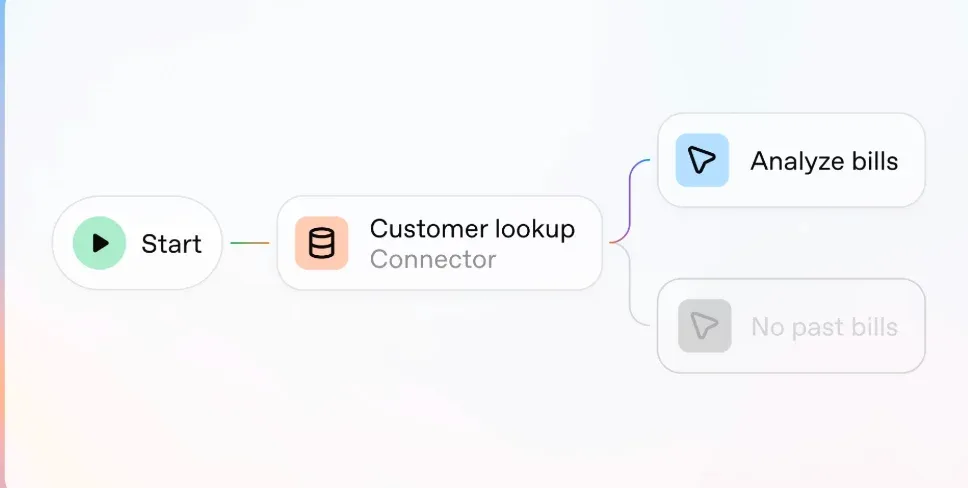
2.1 Agent Builder: Visual Canvas for Orchestration and Collaboration
A visual drag-and-drop canvas designed for multi-agent workflows. Core features include version control, real-time preview, inline evaluation configuration, and custom guardrails.
2.2 Agents SDK (Python/TypeScript): Code Foundation for Fine Control
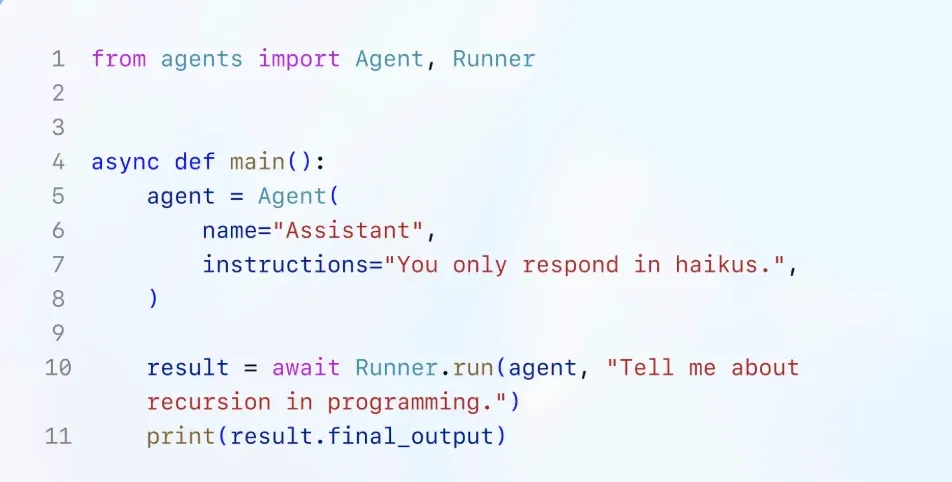
A lightweight, production-ready framework supporting Python and TypeScript. Built on core primitives: Agents, Handoffs, Guardrails, and Sessions. The Handoffs primitive is especially crucial for building complex multi-agent systems.
2.3 ChatKit: Frontend Accelerator for “Last Mile” Deployment
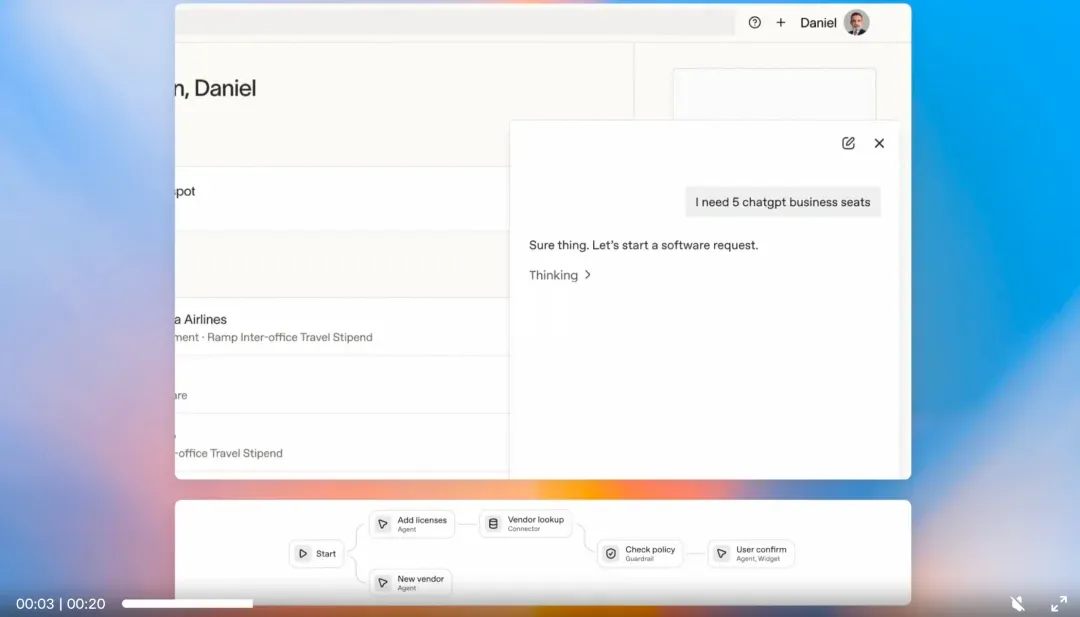
A toolkit for embedding chat UI into products, saving weeks of custom frontend development. Canva used it to launch a developer support agent in under an hour.
2.4 Connector Registry: “Central Armory” for Enterprise Data and Tools
A centralized management panel for enterprises to unify data and tool connections, supporting pre-built connectors like SharePoint. This is OpenAI’s solution for enterprise-grade data governance and security needs.
2.5 Evals & Optimization: Reliability Engine from “Alchemy” to “Engineering”
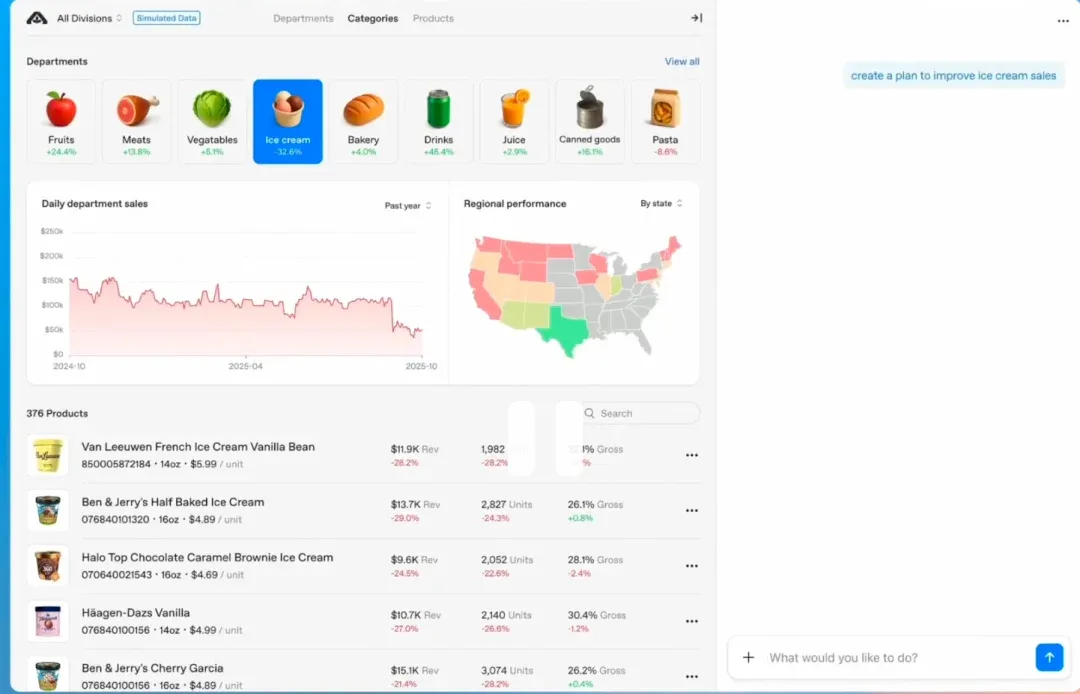
The significantly upgraded Evals evaluation platform marks agent AI evolving from exploratory tool to predictable engineering discipline. It transforms development from “does this feel right?” testing to systematic, data-driven evaluation. Investment firm Carlyle used these tools to boost their due diligence agent’s accuracy by 30%.
2.6 RFT (Reinforcement Fine-Tuning): Ultimate Customization Weapon
Reinforcement Fine-Tuning (RFT) allows developers to “teach” models how to act through feedback loops. For highly specialized agent behaviors difficult to achieve through prompting alone, RFT is the deepest-level control weapon.
3. Builder’s Playbook: Your AgentKit Action Manual
-
Start small: Build a single agent with only 2-3 clearly scoped tools.
-
Establish baselines: Use Evals to establish performance baselines for evidence-based improvement.
-
Implement guardrails early: Safety first for sensitive operations.
-
Track everything: Use tracing to collect latency, cost, and correctness metrics.
-
Iterate optimally: Iterate by adjusting instructions and optimizing tools; only expand to multi-agent systems when absolutely necessary.
Real-World Impact: Klarna’s Stunning Case
Global payments giant Klarna deployed an AI assistant handling 2.3 million conversations monthly (two-thirds of their chat volume), equivalent to 700 full-time customer service agents. Customer satisfaction matches human agents, with projected profit growth of $40 million. This case eloquently proves agent-based automation’s stunning business impact at extreme scale.
5. Ecosystem Competition: AgentKit’s Competitive Landscape
| Feature | OpenAI AgentKit | LangChain / LangGraph | n8n / Zapier |
|---|---|---|---|
| Primary Use Case | End-to-end production agent platform | General, modular LLM application framework | Workflow automation between SaaS apps |
| Orchestration Model | Dual-path: visual and code | Code-first, graph-based | Visual, linear automation |
| Open Source Status | Closed platform, open SDK | Open source (MIT) | Open source (n8n) / Closed (Zapier) |
| Ideal Developer | Developers/enterprises seeking rapid development within OpenAI ecosystem | Developers seeking maximum flexibility and model independence | Developers or business users connecting existing apps |
6. My Final Recommendations and Future Projections
6.1 For Indie Developers and Startups
Leverage AgentKit for rapid prototyping and MVP building. Its deep integration can significantly reduce initial engineering costs. But beware vendor lock-in. When designing architecture, keep core business logic as modular as possible for potential future migration.
6.2 For Enterprise Teams
Start with a high-impact, clearly scoped internal use case. Use Agent Builder for cross-departmental collaboration. Prioritize Connector Registry’s secure data access capabilities, and rigorously test with the Evals platform before deployment. Built-in governance features are key selling points for enterprise adoption.
6.3 Future Projections
OpenAI will predictably continue strengthening AgentKit’s “platform” attributes. A more mature “app store” for sharing agents may emerge. The line between “apps in ChatGPT” and independently deployed agents may blur, forming a unified ecosystem — build once, deploy everywhere. AgentKit’s development will continue focusing on “reducing friction from idea to production,” further cementing its position as the “iOS of AI agents.”
Found Mr. Guo’s analysis insightful? Drop a 👍 and share with more friends who need it!
Follow my channel to explore AI, going global, and digital marketing’s infinite possibilities together.
🌌 We shape our tools, and thereafter our tools shape us.
