
The “Shell” Curse
Hey, I’m Mr. Guo.
OpenAI built a browser called Atlas. A few days ago I wrote an article testing its Agent functionality: OpenAI’s New Atlas Browser Helped Me Manage Projects with Lark Multi-dimensional Tables. I also posted on Xiaohongshu (China’s Instagram), and surprisingly that post went pretty viral — quite unexpected for someone who posts maybe once every few months.
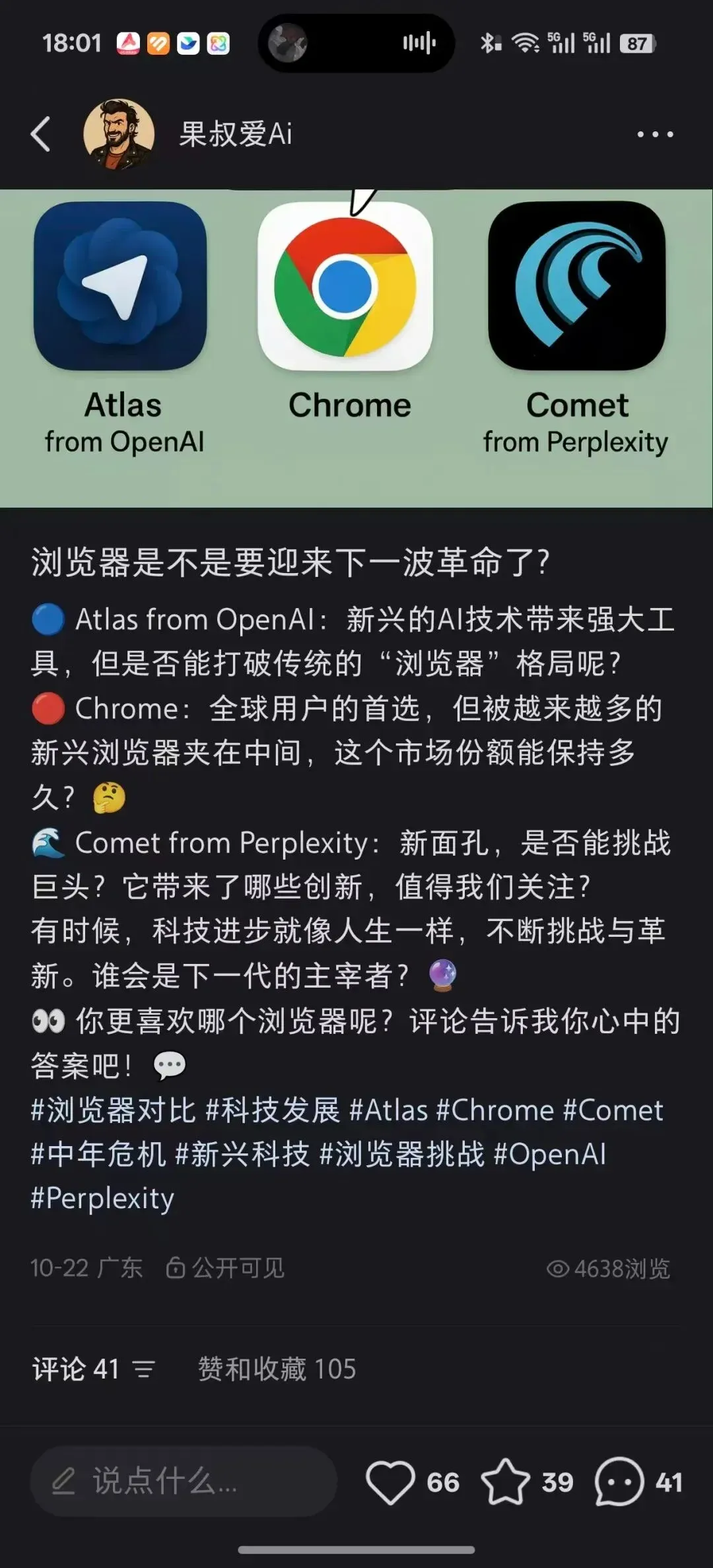
Most comments were along these lines:

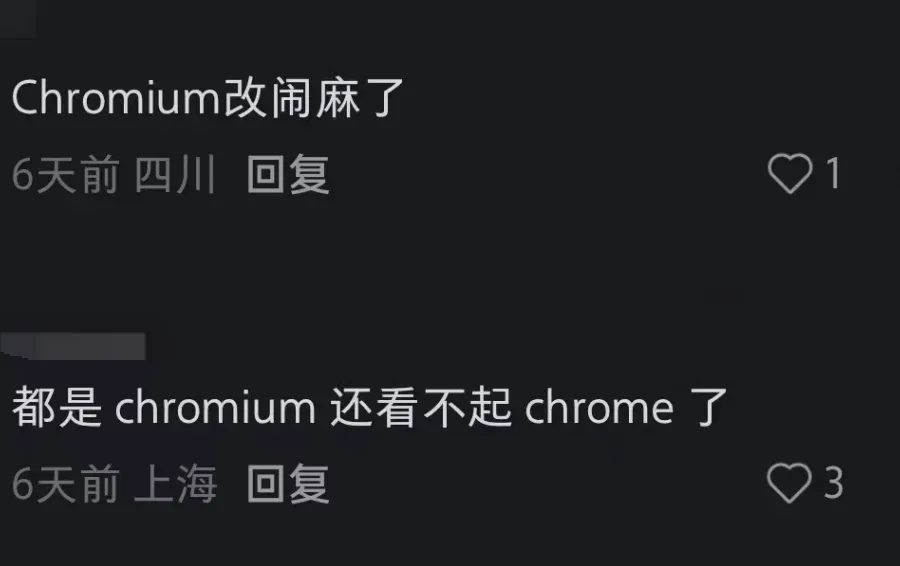
Things like that. So is Atlas really just a Chrome skin? Sure, skinning makes it easy to add Copilot-like features, but for the Agent part — if you want a good experience, it really can’t be solved with browser automation MCP tools alone.
OpenAI just published an article about this on the 30th, so let me break it down in “jianghu” (martial arts world) terms.
What’s a “shell”? It’s taking Google’s Chromium — this “publicly available martial arts manual” — slapping on a new cover, renaming it, maybe adding a couple self-invented “opening moves” (AI sidebar). Edge, Brave, even Comet — all basically this approach.
Anything that’s a “shell” suffers from one “curse”: You must practice according to their “internal energy method.”
Chromium’s “internal energy” (threading model, startup sequence) is extremely domineering and bloated. If you (the browser app) want to use your own “unique technique” (like Apple’s SwiftUI, Metal modern frameworks) for flashy “sword moves” (rich animations, Agent effects), the two “internal energies” will fight inside you — at best causing “internal turbulence” (jank), at worst “energy deviation” (app crash).
Even worse, the “established sect” (Google) updates their manual daily (Chromium upgrades), so you “secret students” (Atlas team) must constantly “restart from scratch” (code merge hell), spending hours compiling — utterly painful.
Who’s on OpenAI’s team? They’re Sam Altman’s most Vibe Coder “elite squad.” Their doctrine: “New disciples must go to battle their first afternoon” (ship on day one). Making them do daily “horse stance training” (compiling Chromium) — might as well kill them. So OpenAI never intended to “shell.” They chose another path, an unprecedented “dark arts” route in the jianghu.
Chapter 1: OWL Architecture — The “Sword-Wielder Separation” Dark Arts
OpenAI’s answer is called OWL (OpenAI’s Web Layer).
This technique’s core mantra is just four words: “Sword-Wielder Separation.”
“Shelling” is forcibly achieving “sword-wielder unity,” but you’re wielding a one-ton “heavy iron sword” (Chromium) — you simply can’t swing it, you can only get dragged around. Atlas takes the “flying sword” approach.
How did they do it?
Atlas app itself (the “wielder”) is a lightweight “sword immortal” built purely with Apple’s “internal energy” (SwiftUI/AppKit). This is why Atlas launched on Mac first. The Chromium engine (the “sword”) was forcibly “expelled” from the body, forged into an infinitely powerful “flying sword” soaring in another “subspace” (independent process).
The “sword immortal” (Atlas) and “flying sword” (Chromium) being completely decoupled has revolutionary benefits:
-
“Sword immortal” moves like lightning (fast startup): Atlas app itself opens instantly because it’s just a lightweight native app. That “flying sword” slowly “warms up” in the background (async loading), and when ready, the “sword immortal” summons it.
-
“Flying sword” explodes, “sword immortal” unharmed (no freezing): Even if the “flying sword” (Chromium) “depletes its energy” (crashes) because of some broken webpage, the “sword immortal” (Atlas main interface) remains completely unharmed — can still sip tea, still chat.
-
New disciples only learn “sword control,” not “sword forging” (fast development): New engineers no longer need hours “forging swords” (compiling Chromium). The team distributes the “flying sword” as a standardized “artifact” to everyone. New disciples just learn how to direct it with “mental power.” This enables “going to battle their first afternoon.”
Chapter 2: Mojo “Mental Power” — How Does the Sword Immortal Control the Flying Sword?
OK, “sword-wielder separation” achieved — sword immortal (Atlas) is far away, flying sword (Chromium) is in another space. There must be a way to control it, right?
That method is Chromium’s own “secret transmission” technique: Mojo (Inter-Process Communication).
OpenAI’s “dark arts” practitioners insanely forced Mojo to work with Swift (the sword immortal’s language) “translators” (bindings).
Now the sword immortal (Atlas) can use “mental power” (Mojo) to directly command the “flying sword” (Chromium):
- “Sword, come!” (Session: Start!)
- “Go slice that mountain (webpage) flat!” (WebView: Render this URL!)
- “Sword light reflected in my eyes!” (LayerHost/Client: Send the rendered image back to me!)
As for the “webpage” we mortals see, that’s just the “sword light” (CALayer) reflected in the “sword immortal’s” eyes while the “flying sword” rampages in another space.
Chapter 3: Dagger Revealed — This “Flying Sword” Was Built for “Agents”
If OpenAI went through all this trouble of “discarding old techniques” just to make the browser start faster and look prettier, you’d be severely underestimating this “dark arts revolution.”
OWL architecture’s sole purpose is to create a perfect “killing weapon” for AI Agents to “possess.”
Traditional browsers were designed for “humans.” Atlas is the first browser truly designed for “AI.” AI using browsers has three “fatal weaknesses” that humans don’t have, and OWL architecture perfectly solves them:
1. Agent “Blindness” (AI Can’t See Popups)
Human pain point: Humans know webpage “dropdowns” and “date pickers” “pop up.”
AI pain point: AI Agent vision models need a “complete screenshot.” If they only “see” the main page but can’t “see” that dropdown popup, they get stuck. Task failed.
OWL solution: “Illusion-Breaking Divine Eye.” Atlas’s Agent mode forcibly composites all these “popup illusions” back onto the main page’s screenshot in the background. AI Agents always get the “true battlefield overview” containing all visible elements.
2. Agent “Regicide” (AI Unauthorized Actions)
Human pain point: Your worst fear is AI going “crazy” while operating webpages, simulating keyboard shortcut Cmd + Q (quit program).
AI pain point: AI needs “hands,” but those hands can’t have the power to “backstab” their master.
OWL solution: “Invisible Sword Sheath.” All Agent-generated “commands” (clicks, typing) are strictly limited — they can only be sent to the webpage’s “renderer” (attacking enemies), and absolutely cannot pass through the privileged “browser layer” (pointing at itself). AI’s hands are firmly locked inside the “webpage content” sandbox — absolutely cannot touch your computer.
3. Agent “Karmic Contamination” (AI Privacy Leaks)
Human pain point: You want Agent to book flights, but don’t want it “remembering” your credit card info or being affected by your current Google login state.
AI pain point: AI needs a “clean” identity for one-time tasks.
OWL solution: “Disposable Paper Dolls.” Agent browsing can run in a temporary “logged out” state. Each Agent session starts a completely isolated, pure-memory “pocket dimension” (StoragePartition).
Result: Every Agent is “amnesiac” — it can’t see any of your Cookies. Task ends, this “paper doll” along with all data instantly “self-immolates,” vanishing without a trace. You can simultaneously deploy 100 “paper dolls” on different tasks — they’ll never interact.
Conclusion: This Isn’t a “Shell” — They’re Building the “Immortal-Slaying Sword Formation”
Now back to the original question: Is OpenAI Atlas really just a Chrome shell?
These aren’t even in the same dimension.
A “shell” browser is taking an existing “aircraft carrier” (Chromium), modifying the deck, repainting, trying to make it look more suitable for carrying “AI planes.”
Atlas (OWL architecture) — OpenAI redesigned and built a completely new “sky carrier” so “AI planes” (Agents) could take off and land with maximum efficiency and safety. It just happens to use Chromium’s “engine.”
This is a fundamental paradigm shift. Atlas isn’t a “browser with AI added” — it’s “an AI Agent execution platform with browser as interface.”
This is why Perplexity Comet is still just an information assistant, while Atlas can (albeit slowly) help you fill forms in collaboration platforms. OpenAI’s painstaking effort isn’t about competing for browser market share — they’re building a standardized, secure, efficient execution layer for the coming Agent era. This chess game is far larger than we imagined.
Found Mr. Guo’s analysis insightful? Drop a 👍 and share with more friends who need it!
Follow my channel to explore AI, going global, and digital marketing’s infinite possibilities together.
🌌 They’re not building a browser — they’re building the Agent’s “sky carrier.”
