
SEO Strategy Review | 2025
How to Save Yourself After a Traffic Crash
By Mr. Guo · Reading Time: 8 Min

A Quick Note
I’m sure many indie developers going global have experienced that dopamine rush when their “first dollar” hits the account. That’s our highlight moment as “super individuals.”
But few talk about another gut-wrenching experience: when your website traffic suddenly cliff-dives, watching your dashboard curve flatline like an ECG — the panic and helplessness are real.
Recently, one of my AI tool sites experienced exactly this.
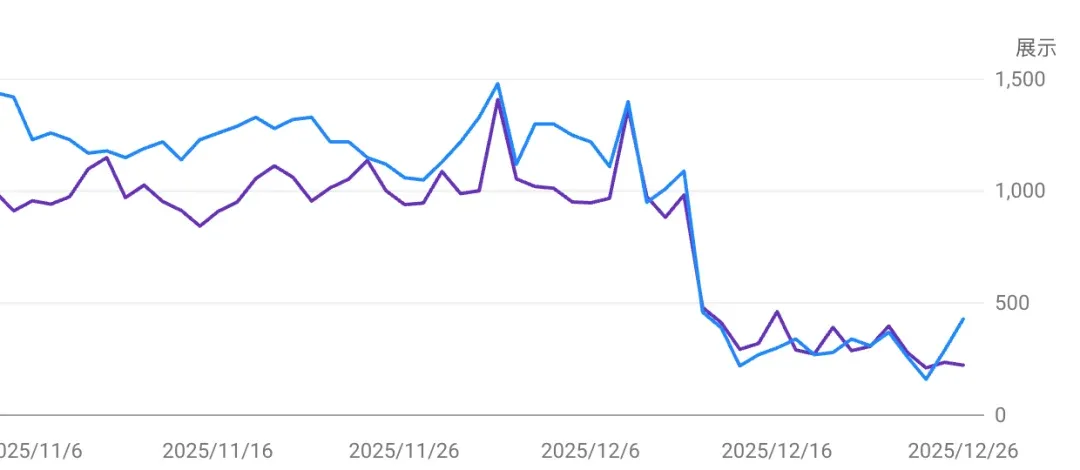
Most people’s first reaction is “it’s over” or “Google’s being random again.” But as an SEO veteran, I know the last thing you need right now is emotion.
I quickly switched into “forensic mode” and performed a thorough autopsy on this project. Today I’m sharing the complete process from diagnosing the problem, finding causes, to performing surgery.
01: Pinpoint the Problem — Don’t Just See “It Dropped,” See “What Dropped”
Facing a crash, vague anxiety is meaningless. Step one must be precise targeting.
My investigation path:
- Scope lockdown: I opened Google Search Console (GSC) and analyzed pages and keywords one by one.
- Conclusion: The drop wasn’t evenly distributed. The damage was highly concentrated — the massive traffic decline hit my core feature landing pages, my most important conversion entry points.
02: Find the Cause — Investigate Like a Detective
After finding the victim pages, I analyzed the “cause of death.” This requires rigorous logical deduction. I executed 4 investigation steps:
Step 1: “Industry Winter” vs “My Problem”
First, determine: Is everyone searching less for this term, or did only I drop?
- Check search volume: I looked at Google Trends and SEO tools — the keyword’s total search volume hadn’t significantly declined.
Conclusion: Demand still exists, market isn’t cold. I’m the one who’s “sick.” Traffic loss is due to ranking decline.
Step 2: Rule Out “Force Majeure” (External Factors)
Did we get hit by Google’s “crackdown”?
- Timeline check: I compared the traffic drop timing with Google’s official update logs.
Conclusion: Unfortunately, confirmed. The traffic decline period coincided exactly with a Google Core Update. High probability of being hit.
Step 3: Competitor Profile (SERP Analysis)
This is the critical step. Since I dropped, someone on the SERP must have risen. Why them?
- Comparative analysis: I carefully studied the competitor pages that shot up in rankings.
Gap identified: Their page types are richer, content deeper, and most importantly — UX and interaction design are clearly better than mine.
Step 4: Fatal Wound Confirmed — Content Freshness
During comparison, I discovered a detail that made me break into cold sweat:
- Competitors: Content updated within the last month, including latest AI model information.
- Me: Page content last updated a year ago.
Conclusion: I thought my page was a “classic,” but in Google’s eyes, it’s “outdated.” Some content (expired parameters, old UI screenshots) no longer satisfies current users. Being replaced was inevitable.
03: Diagnosis Report: Five Critical Issues

After this thorough examination, here’s the diagnosis list for this dying project:
- Zombie Operations: Website barely updated any content for a year, core ranking pages saw no iteration.
- Algorithm Snipe: Weak constitution (stale content) combined with Google Core Update timing — direct demotion.
- Experience Lag: Core Web Vitals have significant room for improvement, inferior to new competitors.
- Keyword Cannibalization: A serious architectural mistake — my Homepage and App Landing Page were competing for the same core keyword, causing internal conflict.
- Fragile Ecosystem: Severely insufficient long-tail keyword coverage, traffic sources too concentrated.
04: Surgery — My 4-Step Self-Rescue Plan
After identifying causes, it’s treatment plan time.
Note: Manage expectations here. Don’t expect “I’ll change today, rankings come back tomorrow.” Based on my experience, recovery from algorithm-induced drops typically requires waiting for the next algorithm update or data re-indexing.
But if you think it’s too far-fetched and don’t act, you’ll never recover.
Here’s what I executed:
Action 1: Resolve “Internal Conflict,” Reshape Homepage Positioning
For the keyword cannibalization issue, I performed complete architectural surgery:
- Action: Redefined the homepage’s brand positioning.
- Details: Homepage no longer stuffs product keywords — instead focuses on Brand Keywords and platform vision. Ensured homepage TDK and content are completely differentiated from product landing pages, making Google clearly understand: homepage is for brand, landing page is for features.
Action 2: Rebuild Landing Page, Double Down on “Content Power”
For outdated content and poor experience:
- Action: Completely rebuilt core product landing pages.
- Details: Optimized copywriting to better match current search intent; updated all demo screenshots and parameters; improved page load speed and mobile responsiveness. Telling Google: “I’m still alive, and I’m more useful than before.”
Action 3: Expand Multi-Language, Find “Blue Ocean Growth”
For traffic concentration issues, I looked to smaller language markets:
- Status: Previously the site was basically English-only, ignoring massive non-English demand.
- Action: Used AI assistance to complete German, French, Spanish, Japanese, and other language pages, with proper
hreflangtags configured. When English is too competitive, smaller-language SEO remains a low-cost traffic goldmine.

Beyond the English red ocean lies the vast blue ocean of smaller languages
Action 4: Cover Long-Tail, Build the “Moat”
For insufficient long-tail coverage:
- Action: Created more Sub-landing Pages.
- Details: Around core features, dug into user-searched Long-tail Keywords, generated targeted content. Built a complete keyword cluster (Topic Cluster), using countless small traffic entry points to protect the core page.
05: Post-Mortem Insights
This traffic crash brought a necessary “system upgrade.”

SEO is an infinite game.
Nothing is truly “set it and forget it.” The moment you stop updating, your assets start depreciating.
If you’re also facing a traffic drop, don’t panic, don’t believe in mysticism. Analyze the data, study competitors, optimize content. This is the only path to self-rescue.
Found this “autopsy report” useful? Give it a 👍 and share it with more indie developers who need it!
Follow my channel to explore the infinite possibilities of AI, going global, and digital marketing together.
🌌 When data starts talking, anxiety shuts up.
