
Word count: ~2900 words
Estimated reading time: ~14 minutes
Last updated: September 24, 2025
Core Structure
- Background Deep-Dive: How was this YC star project born?
- Product Teardown: From AI features to CMS basics — unveiling its “emperor’s new clothes.”
- Value Judgment: Why I call this a classic “snake oil” product?
- Conclusion: Beware “new concepts” wrapping “old scythes.”
Introduction: “Snake Oil” Products in the AI Hype
Hey, I’m Mr. Guo. When AI’s flying high, even pigs can soar — but some pigs are just inflatable plastic models. I frequently browse Product Hunt for inspiration, but lately I’ve stumbled upon many products that make me laugh and cry. So from a product manager and marketing practitioner’s perspective, I’m launching a new series — “AI Snake Oil Exposed.” With dual hats as product manager and veteran marketer, I’ll reveal those AI products exploiting information asymmetry and anxiety to harvest the market.
Our first subject: a “star project” with YC backing that claims to solve GEO (Generative Engine Optimization) pain points — Waldium (formerly Blogwald). When I saw it on Product Hunt recently, something felt off; after testing, my suspicions were confirmed, and I left a frank comment.
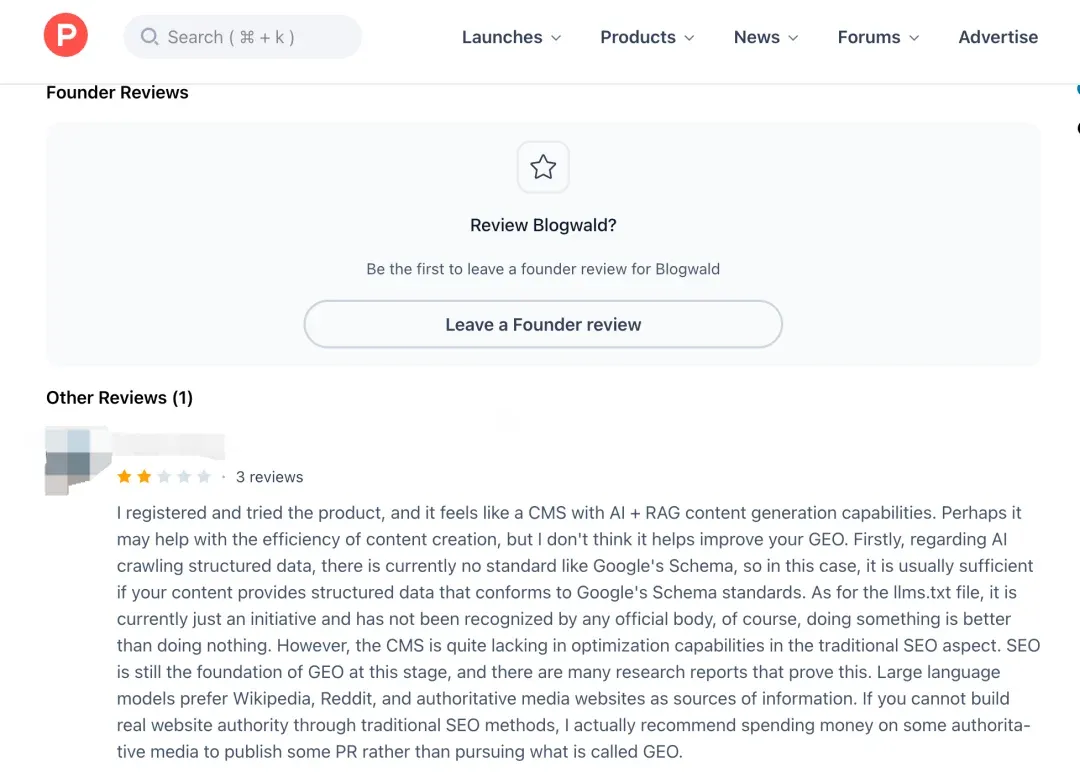
Here’s the gist:
I signed up and tried this product — it feels like a CMS with AI + RAG content generation features. Maybe it improves content creation efficiency, but I don’t think it helps with GEO rankings. First, regarding AI crawling structured data, there’s no standard like Google Schema yet, so usually, providing structured data conforming to Google Schema standards is sufficient. As for the llms.txt file, it’s still just a proposal without official endorsement — though doing something beats doing nothing. However, this CMS’s traditional SEO optimization capabilities are quite poor. Currently, SEO remains GEO’s foundation, as many research reports prove. LLMs strongly prefer Wikipedia, Reddit, and authoritative media as information sources. If you can’t build real website authority through traditional SEO methods, I’d actually suggest spending money on PR in authoritative media rather than chasing so-called GEO.
This article fully expands on that comment. Let’s strip this product down together.
Part 1: Background Deep-Dive — How Was This YC Star Project Born?
To understand a product, first understand its origins. Waldium’s background is quite impressive.

According to public information, its parent company Structured Labs was founded in 2023, precisely positioned, with a 5-person team from San Francisco. The CEO previously worked at Meta and successfully entered top incubator Y Combinator’s S23 batch, securing about $500K seed funding. This provides powerful endorsement. That said, $500K funding for a 5-person team in the US startup environment is perhaps a bit too “mini.”
Its product positioning seemingly hits the market’s “sweet spot.” The website’s grand narrative targets pain points directly: “Traditional SEO is dying,” and their “Generative Engine Optimization” (GEO) concept promises “10x citations and recommendations from AI systems like ChatGPT, Claude, Google AI Overviews.”
See — big company background, grand narrative (disrupting SEO), precise pain point (AI-era marketing anxiety). All elements of a “star project” are present. But the question is: can its product actually support such a big story?
Part 2: Product Teardown — “Fancy Strapi” and “Emperor’s New Clothes”
After actually signing up and testing this product, only two phrases came to mind: “fancy Strapi” and “emperor’s new clothes.”
1. AI Garbage Content with Zero SEO Logic
The product’s AI features are nothing more than crude AI content generation + RAG knowledge retrieval. The articles it generated for me had zero SEO logic, were mechanically AI-feeling, completely unintelligible. Classic AI bulk garbage content at first glance, like someone who knows nothing about SEO wrote the AI prompts. Content like this can’t even do basic SEO — why would AI recommend you? Its AI+RAG content generation capability doesn’t even match Obsidian+Copilot’s local small model embedding local knowledge base. Compared to domestic team products like QuickCreator, this thing is garbage. (Ad revenue should go here, haha)
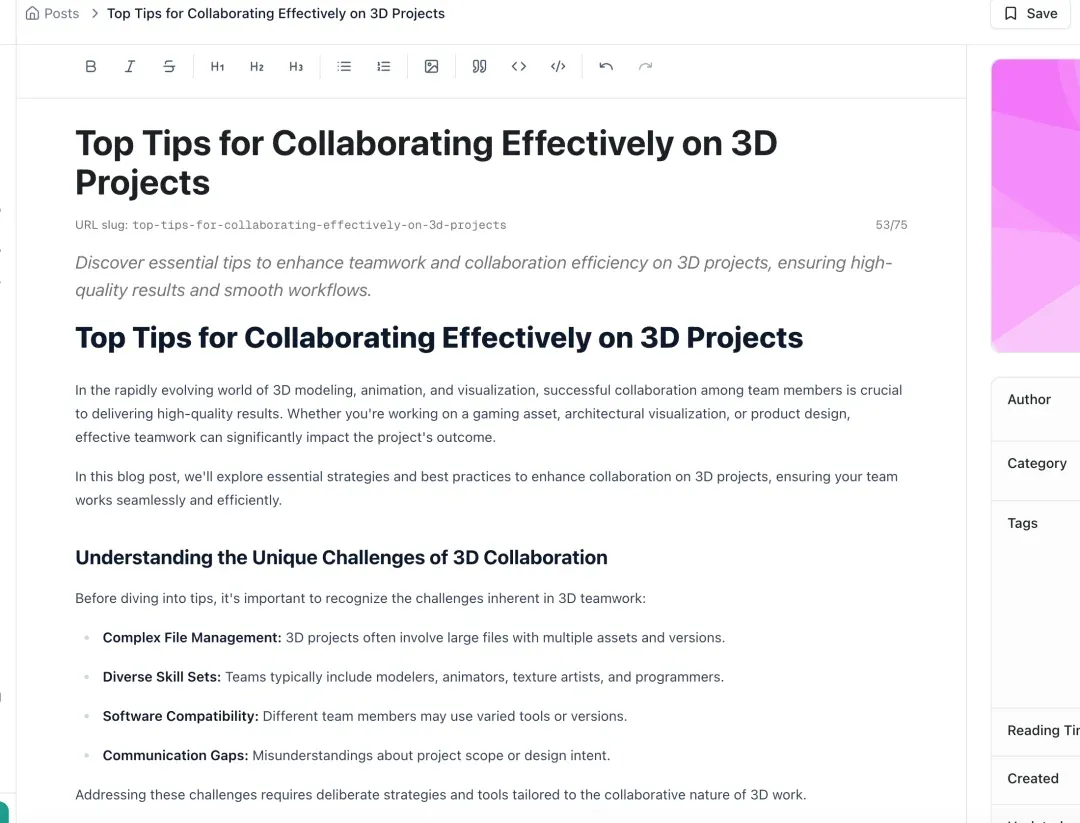
You expect AI to cite this garbage content?
2. Over-Packaged “Pseudo-Concepts”
Let’s return to first principles. Waldium’s core selling point GEO is currently an over-packaged “pseudo-concept.” Because SEO is still GEO’s absolute foundation. As for “traditional SEO is dying” — that’s pure anxiety-mongering. SEO has always been changing, always evolving, but far from dying. GEO is currently just an SEO supplement.
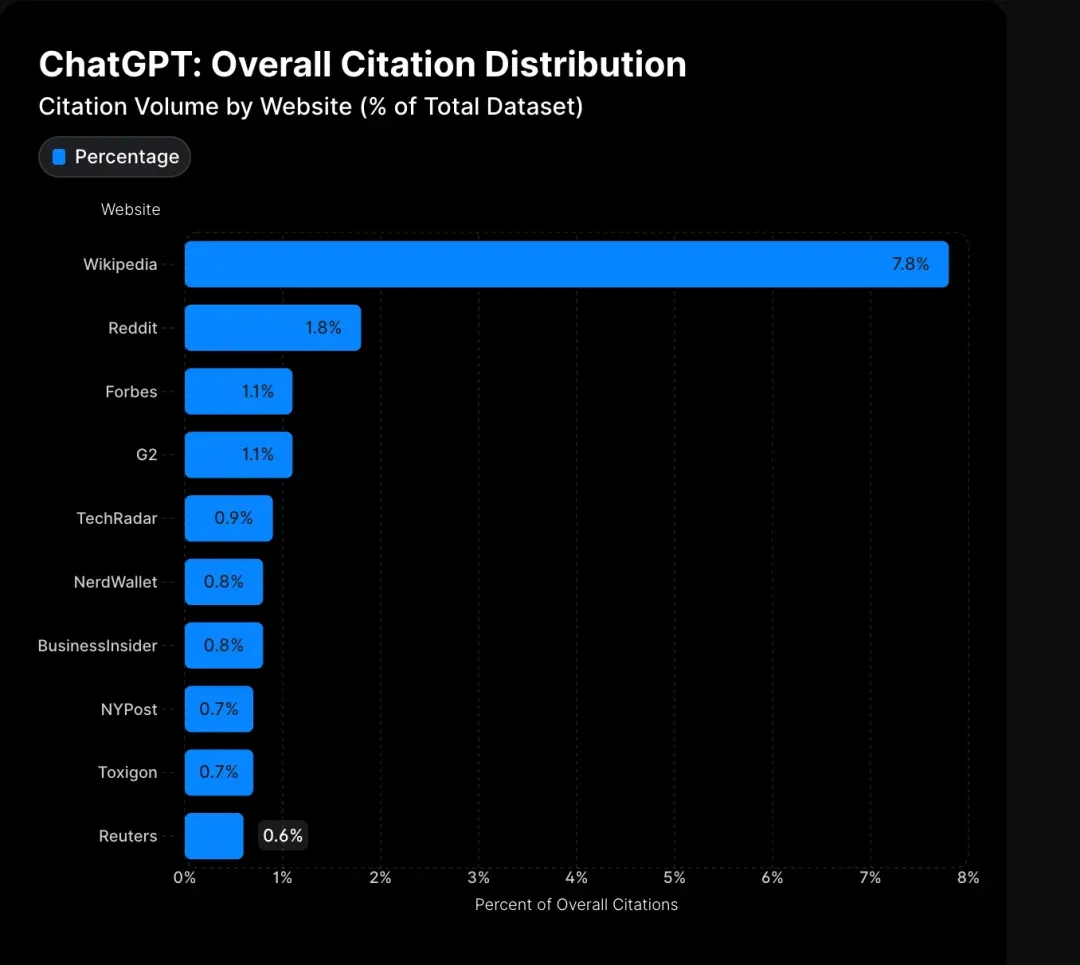
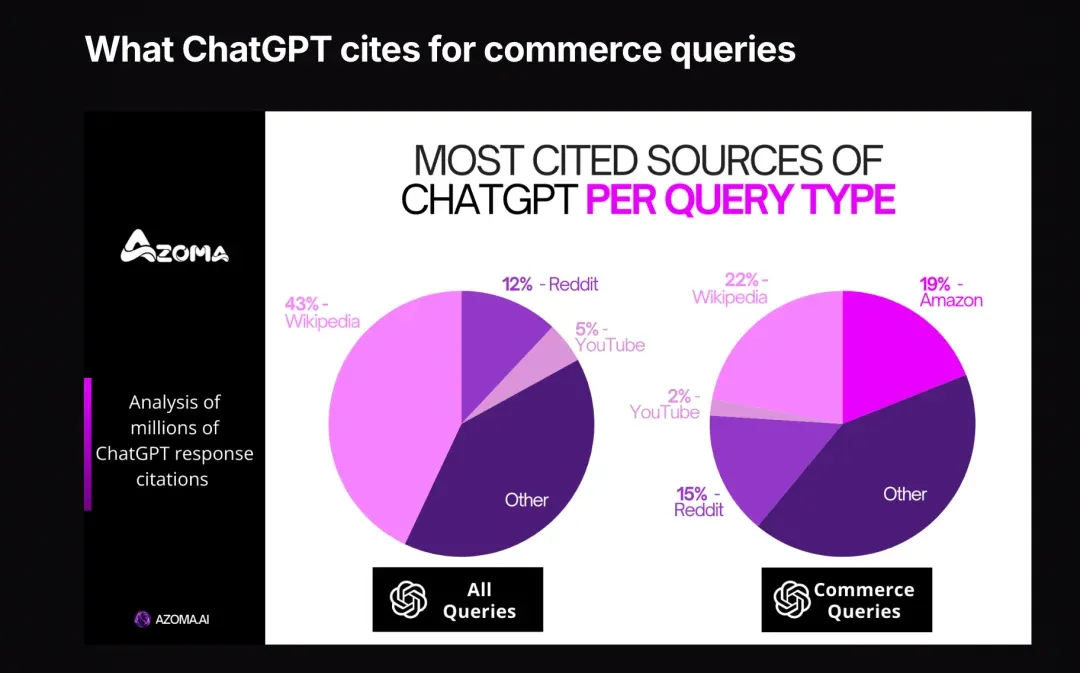
Massive research reports and common sense tell us that LLMs, when providing information, strongly favor Wikipedia, Reddit, and high-authority media sites with long-term domain accumulation. If a website hasn’t established topical authority and trust through traditional SEO methods, AI simply won’t use it as a reliable source. And building topical authority and trust requires SEO.
3. CMS Features as Basic as Open Source
Stripping away AI’s halo, the CMS itself is extremely crude. Missing most customizable SEO fields like Schema structured data, Canonical, etc. Its rich text editor doesn’t even support code editing — a disaster for quick, custom-styled formatting.

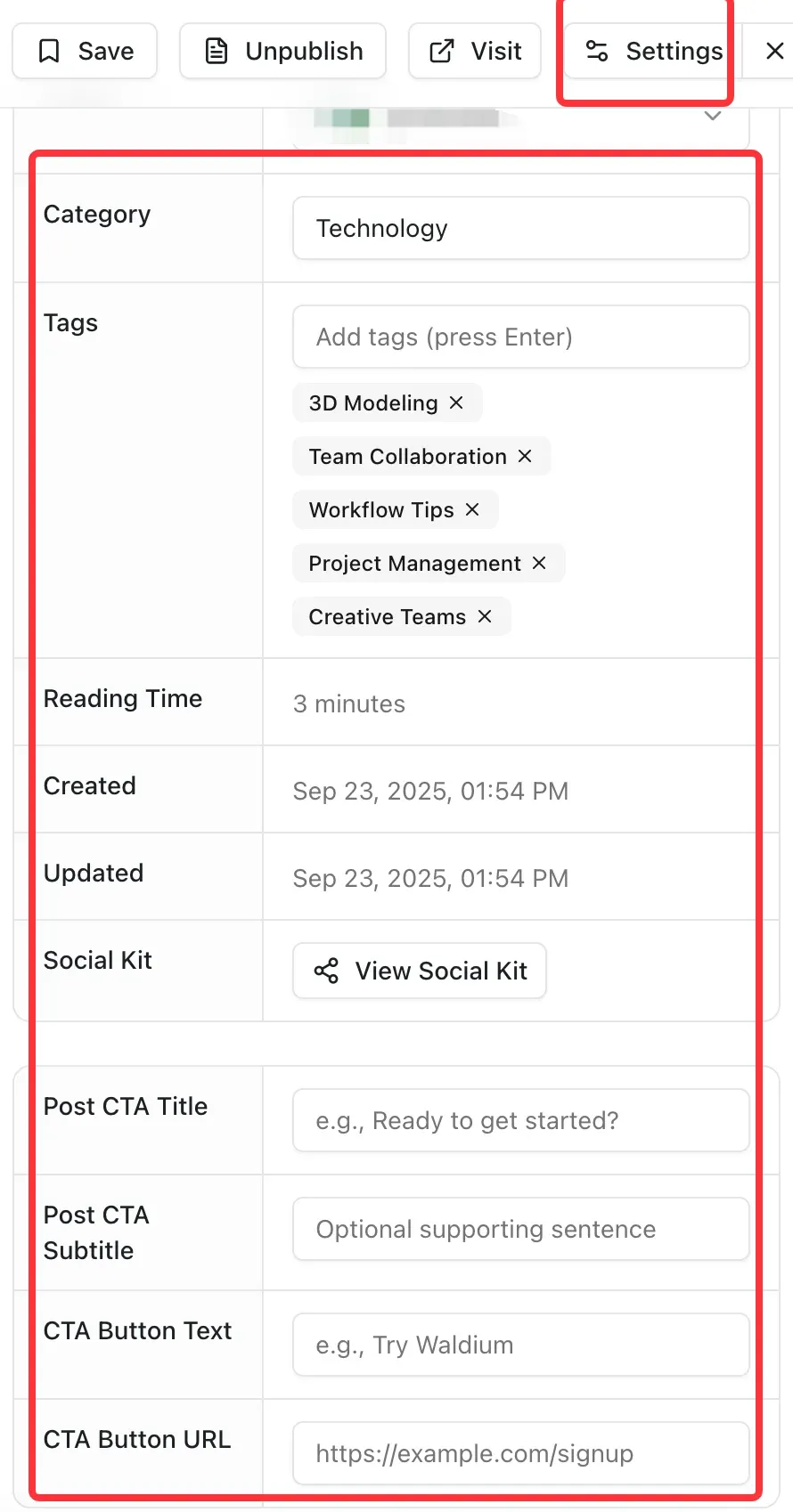
Its content Settings only let you configure these incomprehensible fields.
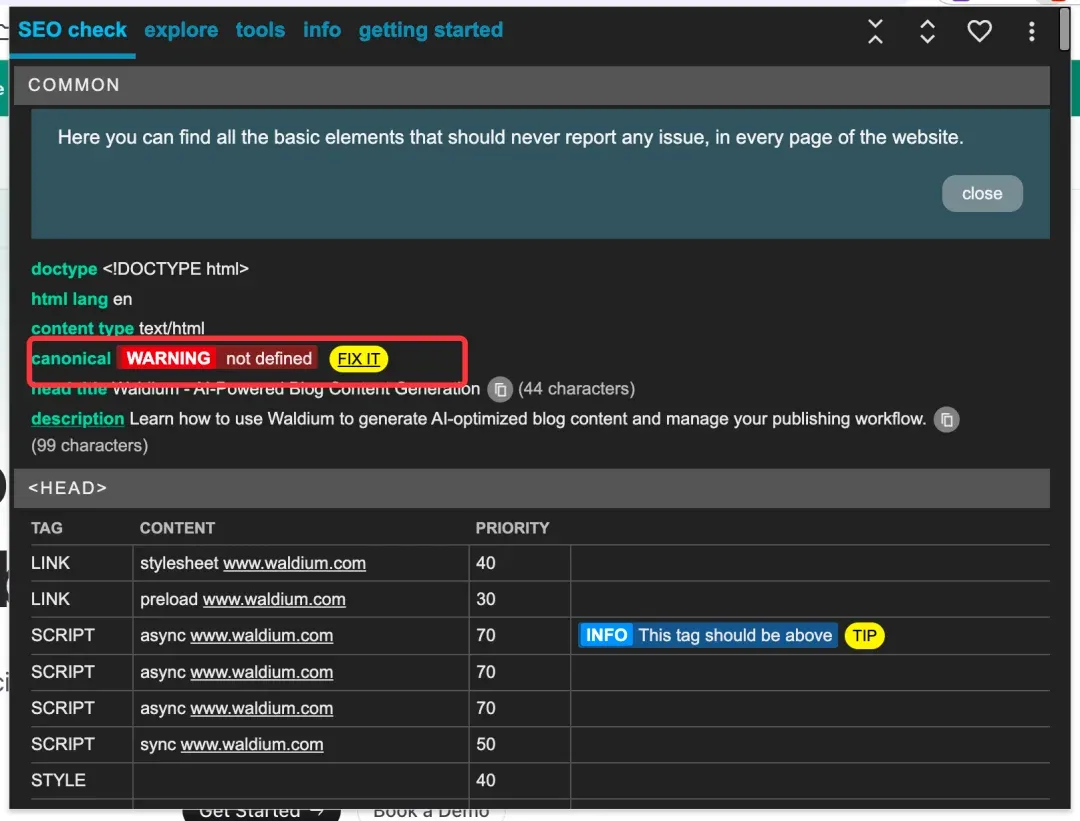
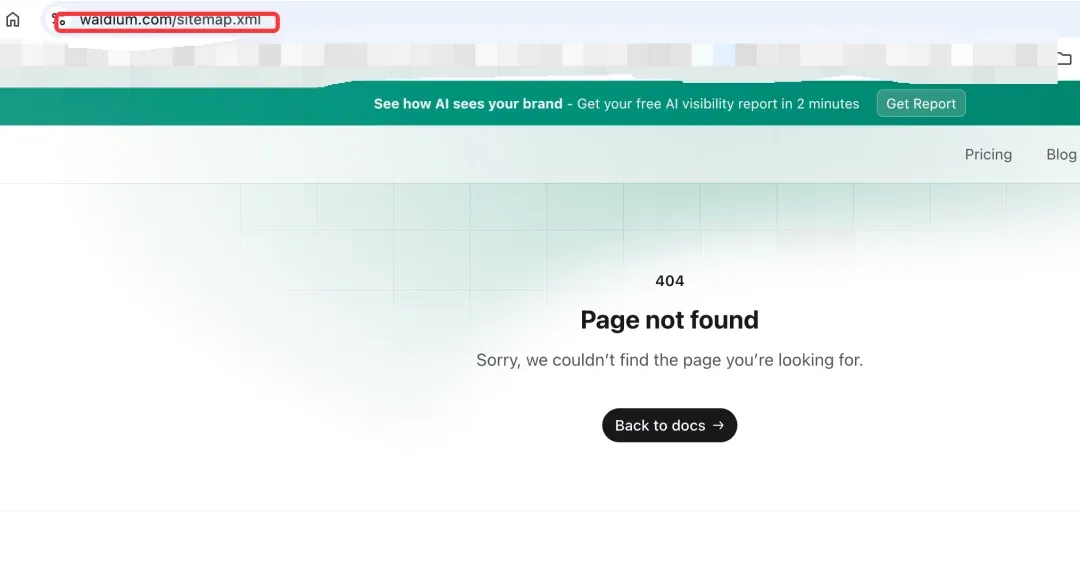
More ironic: I checked Waldium’s own website SEO and found it lacks canonical tags, lacks sitemap, robots.txt, and doesn’t even have the llms.txt it preaches about. Though this might be an early-stage issue, I genuinely can’t trust a company that can’t do its own SEO to help me with GEO. Every traditional SEO SaaS heavyweight we know of excels in their own domain, right?
Part 3: Why I Call This “Snake Oil”
A product’s value depends not on creating novel concepts, but on whether it actually solves users’ core problems.
-
It can’t deliver on core promises: It claims to boost AI citations, but its core mechanism is technically ineffective.
-
It’s expensive with terrible ROI: Cheapest plan starts at $87/month — spending this is definitely being a sucker.

I recently vibe-coded my own project’s CMS using Claude Code, based on modified Strapi, supporting all custom SEO fields, auto-generated Schema, automated Sitemap, Markdown+HTML editing, global ad slot management, automated TOC — all hard requirements. Frontend integrated with Next.js, can provide blog integration for any site via reverse proxy. Integrating AI content generation is totally doable as a plugin. As for knowledge bases, I run a ~1000 SKU e-commerce site and can integrate product knowledge into Gemini’s system prompt. For most products, RAG isn’t necessary — burn more tokens and it’s solved. If you have 10,000+ SKUs, I’d suggest dividing into subcategories for prompt-embedded knowledge bases — tested to work much better than RAG.
If you’re willing to give me that $89, I’d happily share my modified source code. Of course, if you add a zero, I’d even custom develop one for you (laughs).
Why Did YC Invest?
Here’s some of my thinking. YC invests in “teams” and “tracks,” not early product perfection. This team might be excellent and caught the AI content big track, but their current entry point and product approach, in my view, is wrong — mainly because founders probably haven’t deeply understood SEO or GEO. But this doesn’t affect YC’s investment logic. However, we as users and practitioners must have our own independent judgment.
Conclusion: Beware “New Concepts” Wrapping “Old Scythes”
The AI era brings massive opportunities but also spawns countless “snake oil” products exploiting information asymmetry. Waldium is just one microcosm.
My advice for non-capital-type entrepreneurs: Don’t try to create new concepts to educate markets — use new technology to better solve genuinely existing old problems.
For users: Maintain critical thinking, return to common sense. Is a product’s value proposition built on solid, verifiable logic? Or is it just selling a new term you don’t understand but sounds impressive? I think only when the tide goes out do we see who’s swimming naked.

Found Mr. Guo’s exposé insightful? Drop a 👍 and share with more friends who need to avoid pitfalls!
Follow my channel — let’s tear apart more interesting AI products together.
🌌 In new technology waves, staying clear-headed beats blindly following.
